
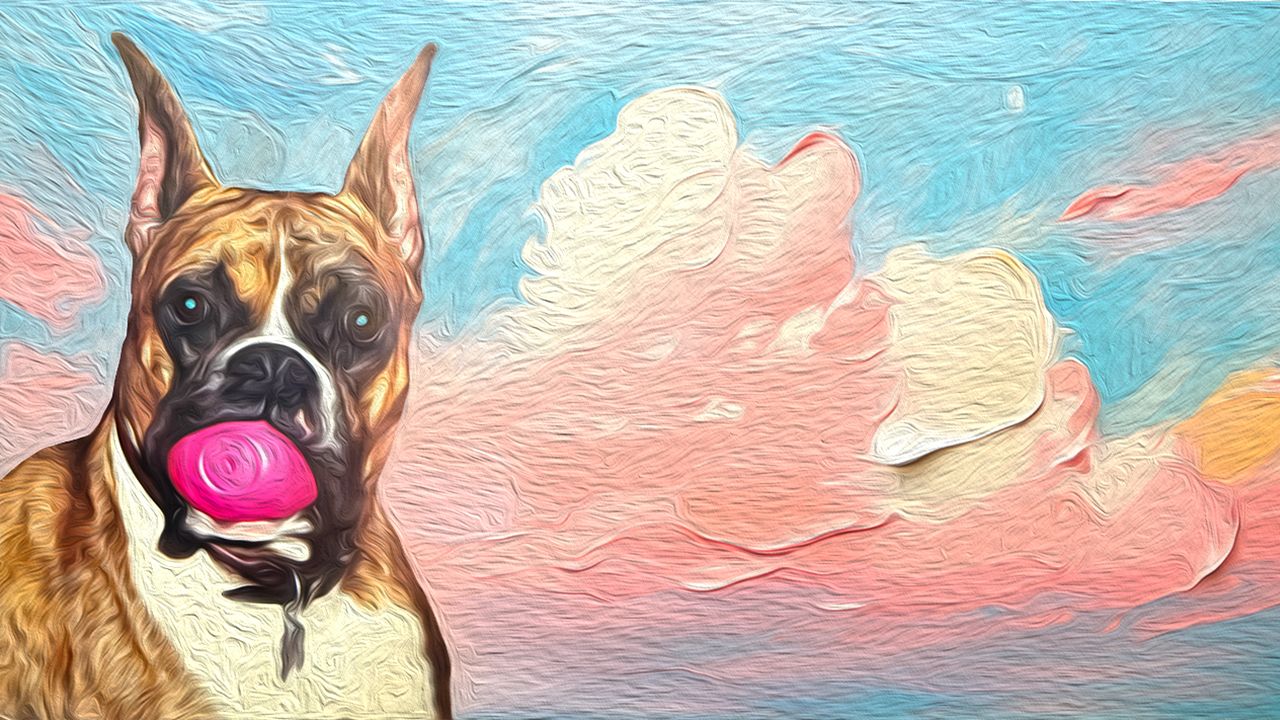
Where the Animal Hospice People Are: AHELP Founder’s Story
By Michelle Nichols, MS, HonCAHP, CGRS | Animal Hospice Coach, Educator, Mentor, and Certified Grief Recovery Specialist, AHELP Founder
Our living room was filled with light on that surprisingly sunny March morning in 2008. Brodie — our sweet, gentle Boxer — lay still on his favorite bed, perfectly nestled in a sunbeam the way he always loved to be. Peaceful. Exactly where he belonged.
I looked at my mom and asked, with more clarity than I expected to feel at that moment, "Why is Brodie’s death so different from all the others?"
She looked back at me and asked, "Where are the animal hospice people?" We didn't know it then, but that question would become the seed of everything. Let me rewind the reel about twenty-four hours — because Brodie's last day with us became a guidepost for my entire life, and I think you deserve to know the whole story.
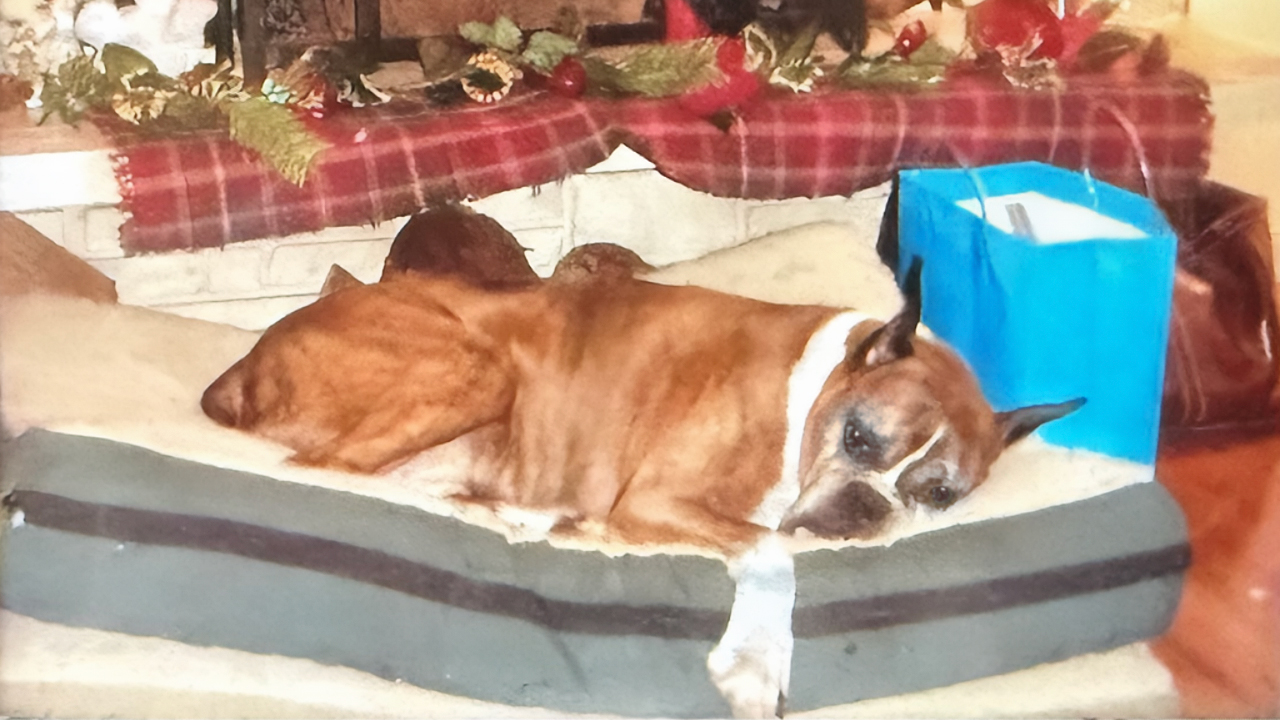
Photo caption: Brodie, our Boxer companion dog, on his last Christmas morning with our family.
For four years, I had been nursing Brodie through congenital Boxer Cardiomyopathy — a heart condition that had slowly, steadily changed the rhythm of our family's life. At twelve years old, he was truly a cherished member of our household to include her Boxer sister Sora and big brother, Rex. Over the past year, he had been having collapsing episodes that sent our hearts dropping every time. We would rush him to the hospital. He would arrive with no symptoms. We would leave with no answers — and Brodie would leave scared, with nothing but stress on his already tired body.
After one of those trips, he looked up at me with those deep, soulful eyes in a way I will never forget. He didn't have to say a word. I knew: Please, Mom. No more hospitals.
Then came the day my mother — a home health and hospice nurse with decades of experience — was visiting and witnessed one of these episodes herself. She watched him carefully and said, calm as anything, "That's a seizure."
I felt a sudden rush of relief. A seizure — that was something the veterinarian could treat. We took him into our trusted clinic, where they knew him well. They stabilized him, sent us home with phenobarbital, and Brodie heartily ate his favorite green tripe dinner that evening like he hadn't in days.
And then–another seizure.
That's when my mother, with her hospice nursing cap on, sat us all down and said something I have carried with me every day since.
“Follow his wishes — they are yours too. Brodie has had a good life. He’s getting tired, and you’re running short on energy to care for him. You're all here with him. Didn't he already ask you, ‘Please, Mom, no more hospital’?”
Then she told us something that became the clincher for me: seizures are not painful to the one experiencing them. Brodie could be comfortable. He could be home. He could be surrounded by everyone who loved him.
So home is where he stayed.
Over that night, we shared stories and looked at old pictures. We fondly remembered Brodie as a young pup, the strongest and most outgoing one in the litter of our girl, Mackenzie. As my first dog as an adult and a gift from my boyfriend, now husband, Mackenzie had been like my baby. I was devastated when she died suddenly from an undiagnosed enlarged heart at age 6, and was later told she had “Boxer cardiomyopathy”. I was determined to find out more about BCM. As a genetic counselor in pre-Internet days, I set out to the library to find out if Brodie could have a similar condition. I learned that as Mackenzie’s first degree relative, he had a 50% chance of having BCM, technically called Canine Dilated Cardiomyopathy. It became my mission to potentially save him from the same plight that led to Mackenzie’s sudden death.
Sure enough, diagnostics found early that Brodie had an abnormal electrocardiogram—and it was surmised—that he had BCM. But thanks to the veterinary cardiology at nearby UC Davis Veterinary School, along with holistic care and a raw diet that I prepared myself, we were grateful to have had additional time that early diagnosis afforded us.
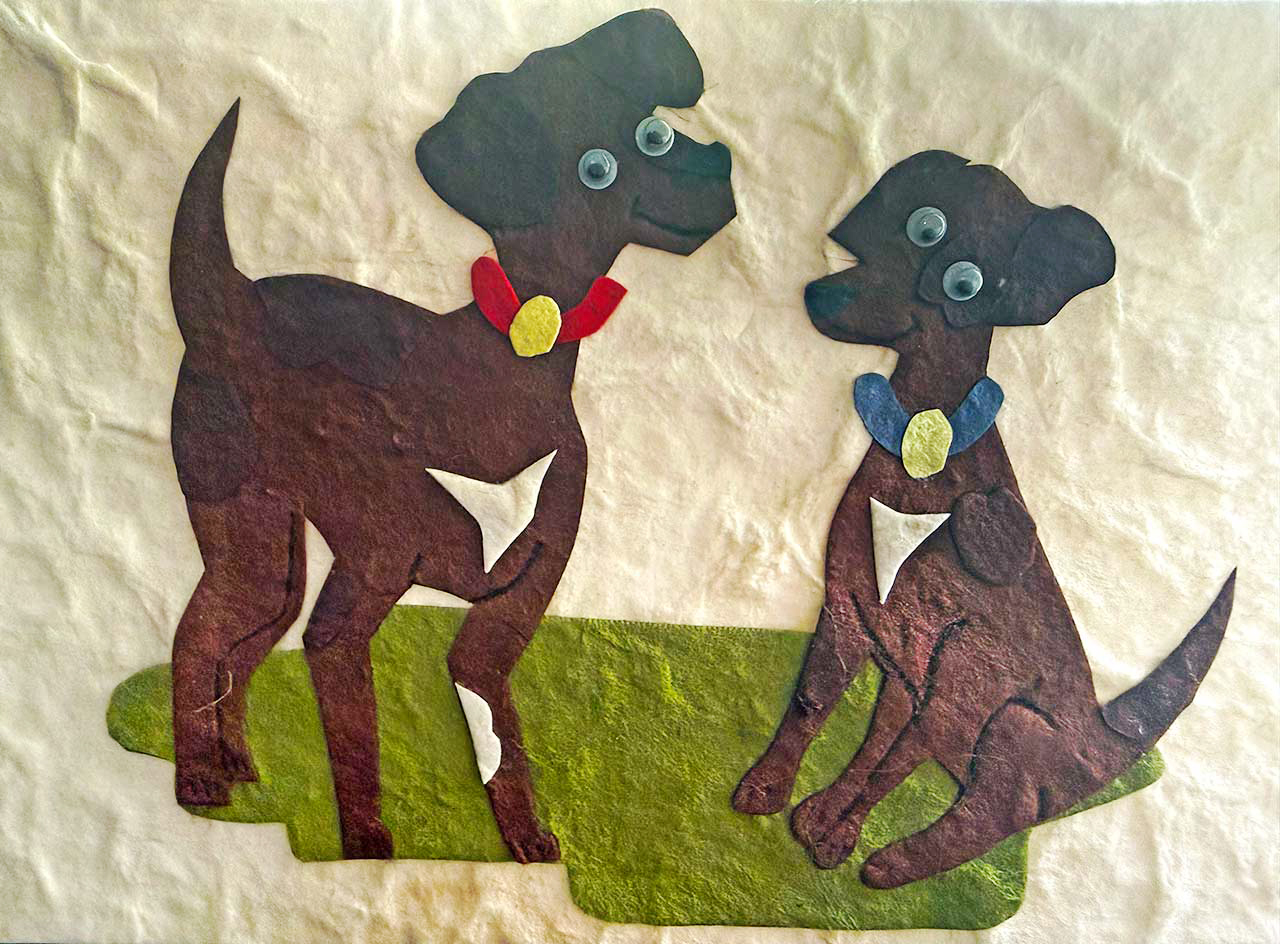
Caption: A friend of ours handmade this sweet condolence card, depicting Brodie’s and his “sister” Sora’s friendship. |
Looking back that night on all our boy had taught me about how to care for an ill dog whose condition had worsened over time, I realized I was “doing hospice” without even knowing it. My husband, 5-year-old daughter and I told Brodie how grateful we were for all the lessons he had taught us about life and love. We smiled and hugged and cried a little, and we watched him decline slowly and peacefully until he finally took his last breath — right there in his sunbeam, with all of us beside him. |
On the sunny morning that followed, the dream was born for a pet hospice organization to help people like us.
If you're reading along — keep your thumb up if you're an animal lover. Keep it up if any part of this story feels familiar, if you've loved an animal the way we loved Brodie. And keep it up if you've ever sat with a human hospice experience that felt something like this — that quiet, sacred, impossible, beautiful thing.
If your thumb is still up — I'm so glad you're here. 💝.
Through AHELP–the Animal Hospice, End of Life and Palliative Care Project, I hear this all the time: “Where were you [last year] when I really needed someone like you?”
Animal lovers recognize how much it would have meant to have someone who could “get it” beyond their vet team. In reflection, they knew how much it could have made a difference during this tender time to have a companion who would fully listen to their needs and unconditionally advocate for them.
I want you to know — I genuinely do understand those needs. Inside and outside of working with pet parents, I don't shy away from conversations about death. I step into them. I listen intently and am moved by the vulnerability people bring to those moments, by the wonderment and the trepidation, sometimes the fear, and always — always — by the profound humanity of all of it. Death is not a failure. It is a part of life. It is a passage. The love that surrounds it is worth every hard conversation we have to have along the way.
That night with Brodie gave me three things I didn't fully have words for yet:
- A deep fascination with the end of life as one of the most meaningful stages we move through — not something to be avoided, but something to be met.
- A genuine curiosity about how others think and feel about that transition — and what lies beyond it.
- And a passion for supporting the bond between pets and the people who love them — people exactly like you.
That, I think, tells you a lot about who I am.
If something in this post resonated with you — if you found yourself nodding along, or if it stirred something you've been holding but not been able to articulate — I would love to continue the conversation.
Come join me for a Virtual Coffee Date. It's a simple, unhurried conversation — just the two of us — about where you are, what your animal means to you, and how I might be able to help. Reserve your spot, click here.
There are no animal hospice people in every living room yet.
But I'm working on it. 🐾♥️👣🌈
Got Questions? 💬 We got answers!
Frequently Asked Questions
- What is animal hospice care?
Animal hospice care is a philosophy of support — not a place. It's the commitment to keeping a seriously ill or aging pet comfortable, surrounded by love, and free from unnecessary intervention as they move toward the end of their life. It honors the bond between pets and the people who love them, and it recognizes that a good death at home, in a sunbeam, with family close by, is not a failure. It is a gift.
- What does AHELP do?
AHELP — the Animal Hospice, End-of-Life, and Palliative Care Project — exists to support pet families and the professionals who serve them through one of life's most tender passages. We provide education, resources, and community for caregivers who are navigating a pet's serious illness or decline, and for the veterinary and hospice professionals who walk alongside them. At the heart of everything we do is a simple belief: no family should have to face this alone, and no pet should leave this world without the comfort and dignity they deserve.
- How do I know when it's time to reach out for animal hospice?
Sooner than you think — and earlier than most people realize is even an option.
The most common thing I hear from pet parents is that they wish they had called earlier — before the crisis, before the exhaustion, before the fear made clear thinking hard to find. What many families don't know is that palliative care, which means comfort-focused support during any stage of serious illness, can be introduced at the very moment of diagnosis — even alongside curative treatment. You don't have to be at the end of the road to deserve support on the journey.
If your pet has received a serious diagnosis, if you're noticing a slow decline in their quality of life, or if you're simply carrying a weight you can't quite name — that is exactly the right moment to reach out. You don't need to have all the answers first. That's what we're here for.
- Where is AHELP located, and can they help me?
AHELP now supports pet families beyond Seattle, Washington. Thanks to telehealth — over video, email, direct messaging, and phone — we support pet parents across the United States and Canada from wherever you are. We recently branched into Southern California and are developing a network of professionals in San Diego.
Our Partners to the Bridge, Animal Hospice Coaching services range from a single "ask-me-anything" call focused on specific concerns, to Comfort Care Coaching with our veterinary team, in which Michelle also offers individualized Companion Coaching — completely customized for each pet parent — which includes emotional support and the co-creation of an end-of-life plan articulated in an Advance Directive you can share directly with your veterinary team. Pet parents also receive guidance in quality of life tracking and euthanasia decision-making.

Caption: Schedule a Virtual Coffee Date on Calendly with Michelle Nichols, AHELP Project
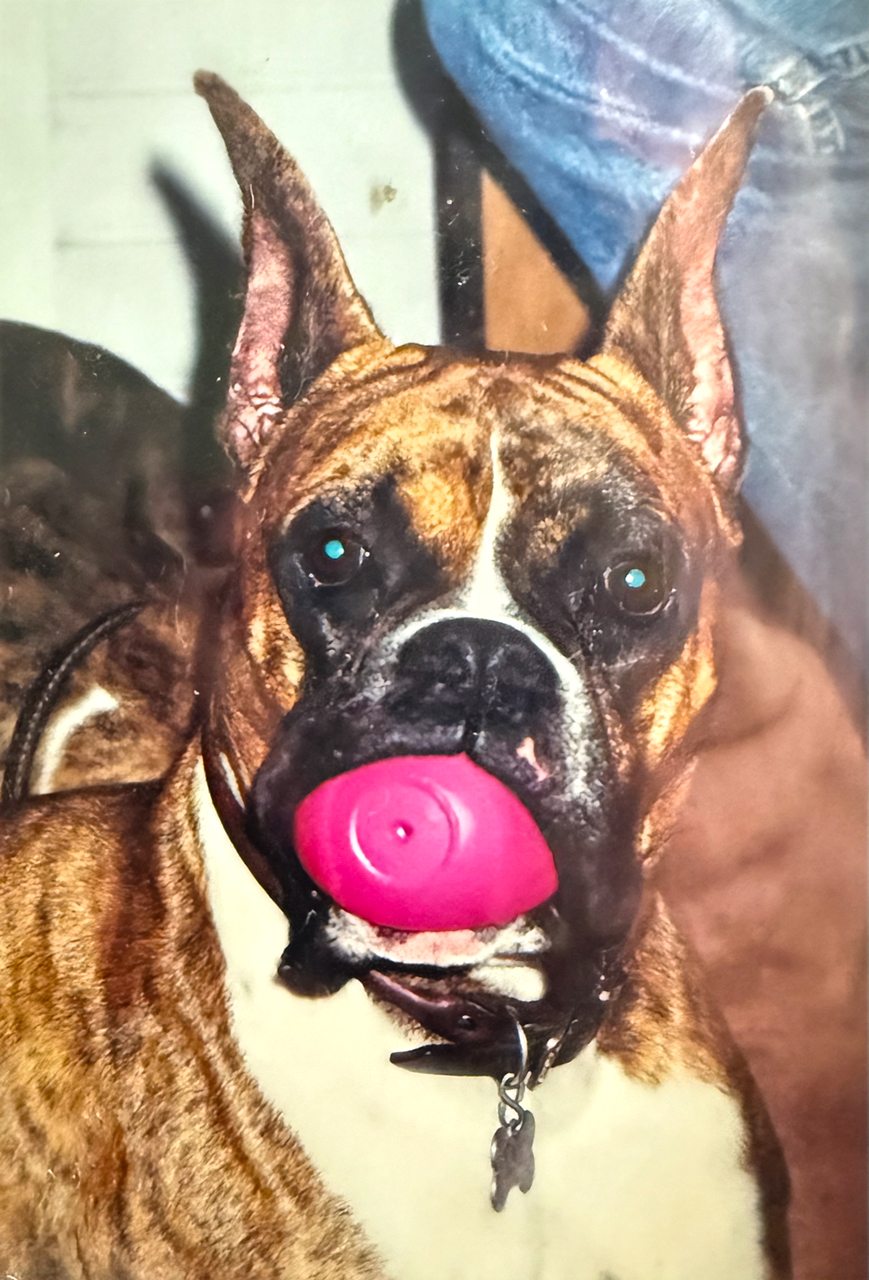
( Blog post banner: Graphic impression of Brodie in his early years. He loved his pink squeaky ball! )
|
About the Author: Michelle NicholsAs an Animal Hospice Coach and Educator—a Pet Hospice Partner—I have the privilege of supporting families through one of life’s most sacred and challenging passages: accompanying a beloved dog or cat in their final chapter. My goal is to offer not only practical guidance but also emotional support and a deeper way to relate to this time—not just as an ending, but as a meaningful, even healing experience. With 30 years of combined experience in human and pet-related grief counseling, I continually refine my skills to serve pet parents best and to help prepare the next generation of pet hospice leaders through education and mentorship. My virtual door is always open. Reach me at [email protected]. |
Join Our Newsletter List!
You’ll receive the latest blog posts, useful tools, and plenty of inspiration. As a special gift, you'll receive a FREE Handout Combo download of Animal Quality of Life Indicators to Report to Your Veterinarian AND 40+ Questions to Ask Your Veterinary Team—both a valuable resource!

