

When Treatment Ends: Finding Support as Pet Care Shifts from Cure to Comfort
By Jayne Law | Author, PMP®, CAPM®, CAHF
Founder, saudade paws | Author, saudade paws Field Guides
The vet looked at me across the exam table and said, “Nebulize him with steroids. See how long he lasts.” I left the clinic with my 17-year-old mini poodle, a bag of medications, and no roadmap.
He had a collapsing trachea — a condition that would eventually make it impossible for him to breathe. But what did that actually mean for me? Would he suffocate? How would I know when the end was near?
No one explained it. I was just supposed to nebulize him and wait.
Wait for what, exactly?
When You Become Everything Overnight
Within days, I went from being a pet parent to something else entirely: nurse, monitor, decision-maker, and witness to decline.
I learned that I needed to start nebulizing him to reduce his tracheal (windpipe) sensitivity and ease his breathing. I asked: “What did that entail?” I learned that a nebulizer is a small machine with a chamber that fits over the face, allowing the patient to breathe in a steroid mist.
And then, my question of how to do it… They didn't have one in the clinic, so they pointed me to a human nebulizer on Amazon, told me to buy it, and left me to figure out the rest at home. It came with a human face mask and a mouthpiece, and when I went online to figure out what to do with a dog, I saw other pet caregivers just spraying the mist toward their dogs' noses.
I was to start with nebulizing treatments twice a day. Then, when that schedule no longer worked, I increased it to three times a day. Then four times…then throughout the night. Every labored breath felt like a countdown I couldn’t stop.
I wasn’t just loving him anymore — I was responsible for deciding how his life would end, and I had no training, no framework, and no idea what I was doing.
Feeling overwhelmed, I went back to the clinic, hoping for answers.
“The medication isn’t working,” I said.
The vet replied: “Just sedate him until the end.”
What did that mean? Sedate him how? For how long? What would the end look like?
I left with more questions than I came with — and a growing sense of panic and fear.
Why This Phase Feels So Isolating
When curative treatment ends, something shifts.
Appointments get shorter. Conversations focus on symptom management. You leave with instructions—nebulize, medicate, monitor—but no guidance on what comes next.This isn’t about veterinarians not caring. It’s about how the system is built: veterinary care excels at diagnosis and treatment but is often less structured in guiding families through the final chapter.
Veterinarians were caring for my dog’s medical needs — but I needed guidance for the emotional and ethical weight of caring for him at the end of life.
In pet care, many caregivers receive a treatment plan—but little guidance on what comes next.
And that silence can feel deafening.
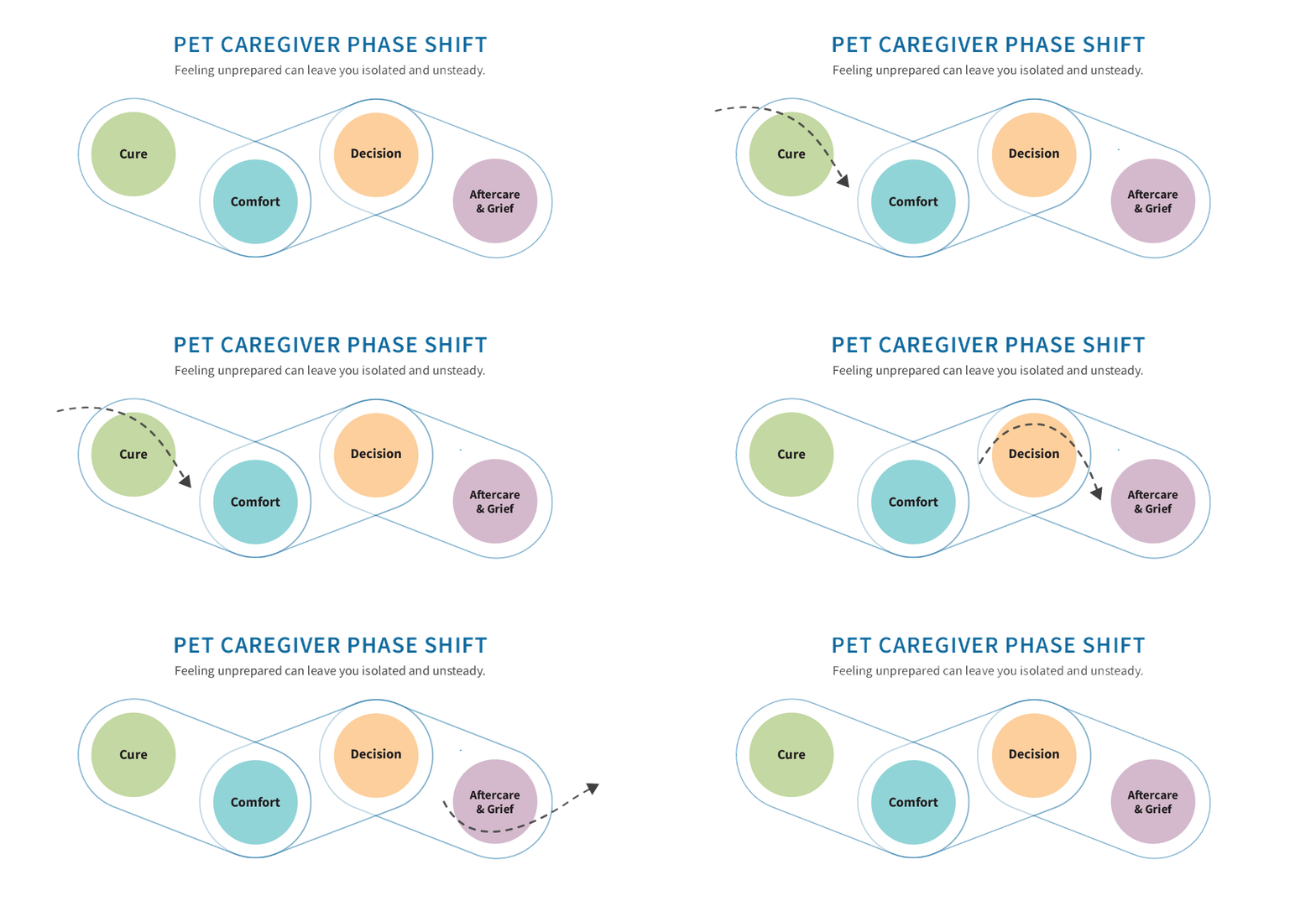
Graphic caption: Pet Caregiver Phase Shift: Feeling unprepared can leave you isolated and unsteady - animated arrow runs through Cure, Comfort, Decision, and Aftercare & Grief Phases
The Phase Shift No One Names
This is the transition most caregivers aren’t prepared for:
- Cure Phase: tests, treatments, hope, clear goals
- Comfort Phase: symptom management, quality of life, uncertainty
- Decision Phase: “When is it time?”
- Aftercare & Grief Phase: logistics, shock, emotional fallout
Most people are supported during treatment.
Many caregivers feel alone during everything that follows.
If you’ve ever asked yourself, “Am I doing enough? Am I doing too much? How will I know when it’s time?” — you’re not alone.
I learned later in my training to become certified in Animal Hospice that these questions, this tension, this exhaustion had been described in the veterinary research. It was called Pet Caregiver Burden, named after the common experience that family caregivers have with their human loved ones.
Anticipatory Grief Lives Before the Loss
I later learned that the depths of my despair at the time also had a name, called anticipatory grief — the mourning that begins before death.
You grieve the dog who used to run after your baguette. The dog who used to kick in his sleep peacefully. The future you thought you still had.
And anticipatory grief doesn’t just live in your heart. It shows up in your daily life in ways many caregivers don’t recognize at first:
- Emotional shifts: waves of sadness, dread, irritability, or regret
- Changes in focus: forgetfulness, difficulty concentrating, feeling mentally foggy
- Withdrawing: pulling away from friends or social life because no one understands
- Physical and mental fatigue: feeling drained by caregiving and constant worry
- Grieving new normals: mourning the loss of walks, play, or your pet’s independence
Recognizing these signs doesn’t make the grief disappear. But it can help you understand that what you’re experiencing is a normal response to an extraordinary emotional burden.
My emotional exhaustion came from the stress of navigating his care and managing my anticipatory grief, leading to commonly experienced caregiver fatigue — not just sadness, but the chronic stress of managing care while carrying the moral weight of decisions. I felt all of it.
And I felt it alone.
When Exhaustion Shapes Your Decisions
One morning, my dog had a good day. He got excited for food and ran around in a frenzy as I prepared it, like the old days. He ate everything and wagged his tail.
That week, I made the decision to euthanize him.
Not because I felt clear. Not because I felt peaceful. But because I was terrified of what would happen if I waited longer. I was afraid he would suffocate in the middle of the night. I was afraid I would panic. I was afraid I would fail him.
So I chose at-home euthanasia in fear, not clarity.
And this is where support matters: when caregivers don’t have a roadmap, fear starts making decisions for you.
Signs You May Be Overwhelmed
If you’re caring for a pet nearing the end of life, caregiver fatigue can look like this:
- You’re exhausted even after sleeping
- You seek reassurance constantly (friends, vet, online groups)
- You avoid conversations about decline because it’s too painful
- You feel numb or emotionally disconnected
- Decisions feel impossible — even small ones
- You feel resentment, then guilt for feeling it
These are not signs of weakness. They’re signs you need support.
What Earlier Conversations Could Changes
Imagine if, when treatment shifted to comfort, your vet said:
“We’re entering a different phase now. Let’s talk about what comfort care looks like — and what support is available for you both.”
Earlier conversations can give you:
- a clearer sense of what progression might look like
- quality-of-life guidance
- a plan for nights, crises, and “what if this gets worse”
- referrals to hospice providers, mobile vets, or grief support
Those conversations don’t remove the pain.
But they can reduce panic — and prevent crisis-driven endings.
What You Deserve to Hear After a Shift from Cure to Comfort
When treatment ends, many caregivers leave the clinic with instructions but no reassurance. If you feel abandoned, it’s not because you’re asking for too much — it’s because this phase is rarely explained.
Here are examples of guidance that can make this transition less frightening. If you’re not hearing these messages, you are allowed to ask for them.
You deserve to hear:
- “We’ll continue to care for both of you.”
- “You don’t have to decide today.”
- “This is a shift from cure to comfort — and we’ll guide you.”
- “Let’s define what a good day looks like, and what signs suggest suffering is increasing.”
- “Here are grief support resources — because what you’re feeling is real.”
What You Can Ask Your Vet (Even If They Don’t Offer Pet Hospice)
Advocate for yourself to get the support you need with questions like:
- “Can we talk about comfort goals, not just treatments?”
- “What signs tell us pain and/or distress is increasing?”
- “In your experience, what does suffering look like with this condition?”
- “If this worsens at night, what’s our plan?”
- “Do you know mobile vets or hospice providers locally who can visit my home?”
- “Do you recommend grief support resources?”
These questions don’t demand perfection. They open the door to shared understanding.
You Were Never Meant to Do This Alone
I euthanized my dog at home on a day when he seemed comfortable. I wanted him to have one more good day.
But regret lingered — not because I didn’t love him, but because I made the decision from exhaustion and fear instead of clarity and support.
There was a condolence call. But no scaffolding. No roadmap. No real guidance for the emotional and ethical weight of what I was carrying.
If you are in this phase now, please hear this:
Feeling lost is not failure.
Care should not disappear when the cure ends.
And you were never meant to carry this alone, even if it feels that way now. 💜
( Blog post banner: photo of a tan senior mini poodle looking up to the sky and enjoying the backyard, photo credit: Daniel Diesenreither. )
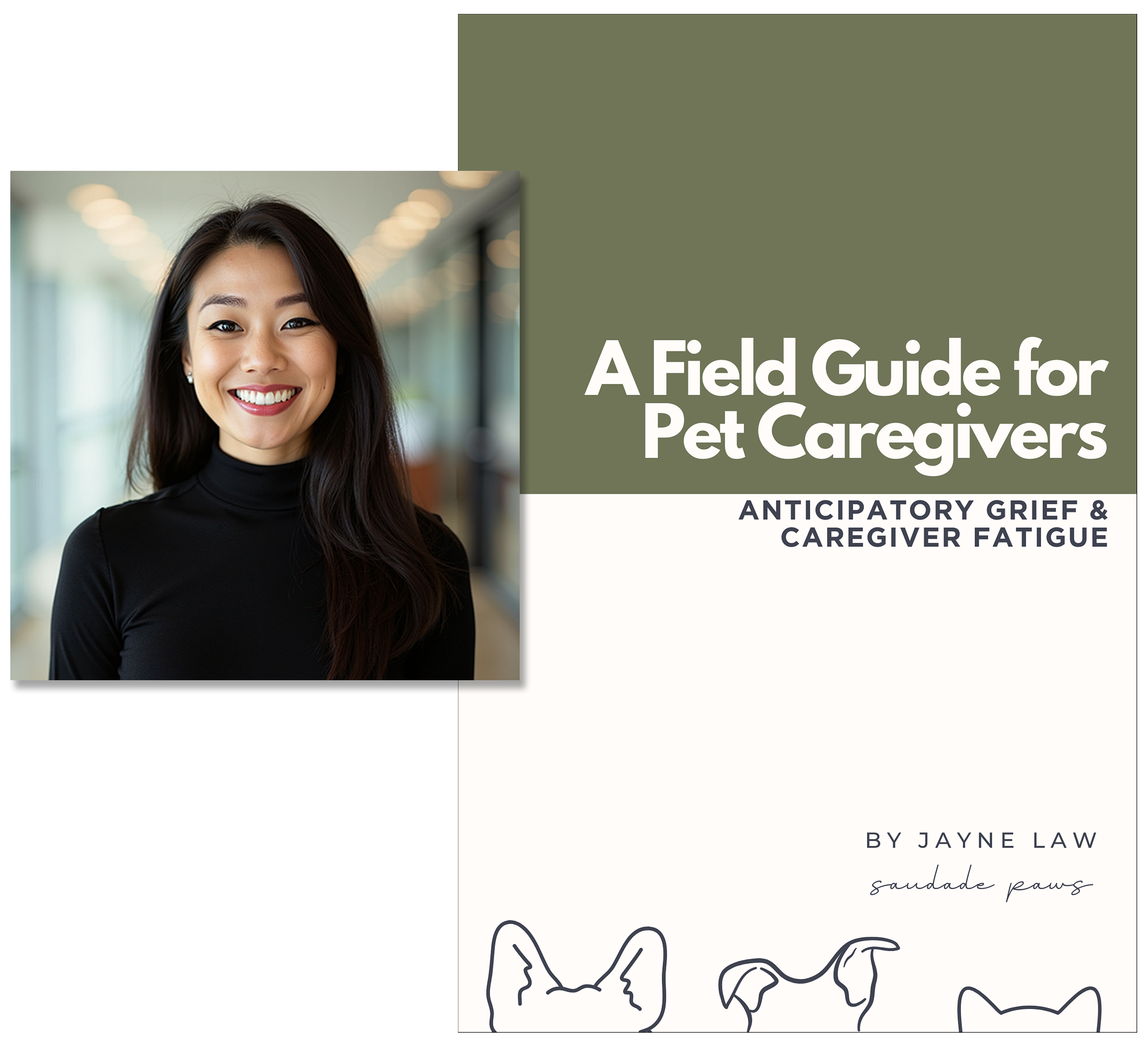
Photo caption: AHELP Project Guest Blogger - Jayne Law portrait and cover image of her book, A Field Guide for Pet Caregivers, purchase on Amazon
About the Author:
Jayne Law
Guest Blogger
Jayne Law is the founder of Saudade Paws, a consultancy dedicated to supporting pet caregivers through the emotional challenges of palliative and end-of-life care. As the author of A Field Guide for Pet Caregivers, Jayne addresses the emotional journey, ethical dilemmas, and decision-making that come with a pet’s final chapter. She partners with veterinary teams and pet service professionals to enhance end-of-life experiences for both animals and their families.
Learn more about Jayne’s work in the Animal Hospice field at www.saudadepaws.com.
Join Our Newsletter List!
You’ll receive the latest blog posts, useful tools, and plenty of inspiration. As a special gift, you'll receive a FREE Handout Combo download of Animal Quality of Life Indicators to Report to Your Veterinarian AND 40+ Questions to Ask Your Veterinary Team—both a valuable resource!

