

Between Appointments: Why Caring for Your Ill or Aging Pet Can Feel So Hard
By Michelle Nichols, MS, HonCAHP, CGRS | Animal Hospice Coach, Educator, Mentor, and Certified Grief Recovery Specialist, AHELP Founder
If you're caring for a pet with a serious illness, or a senior companion whose body is slowly changing, I want to start with something you may not hear often enough: you're doing important work. Quiet, round-the-clock, love-in-action work that most people never see.
If some days feel harder than you expected, even though you trust your veterinary team completely, I want you to know you're not imagining it and you're not doing it wrong.
There's a reason this feels hard. It has less to do with you, or your vet, than you might think. It has to do with when care happens.
In my "tail" today, I'll walk you through:
- What really happens to care once you leave the exam room
- The gap in care that almost no one talks about, and why naming it isn't about blame
- A few Care Tips for the in-between hours
- How AHELP is working to fill the gap between your veterinary appointments
Most importantly, you’re not alone—support is on the way, and you don’t have to face this by yourself.
Your Veterinary Team Is Doing Extraordinary Work
Let me say this clearly, because it matters: veterinary teams do remarkable things for pets with serious or life-limiting illness. They diagnose, manage pain and symptoms, guide treatment decisions, and help you understand what's happening in your pet's body. That work is skilled, compassionate, and deeply human. It's the foundation of good care.
Still, many pet parents and many veterinary professionals recognize a quiet truth:
Even when medical care is excellent, caregiving can still feel hard, especially between appointments.
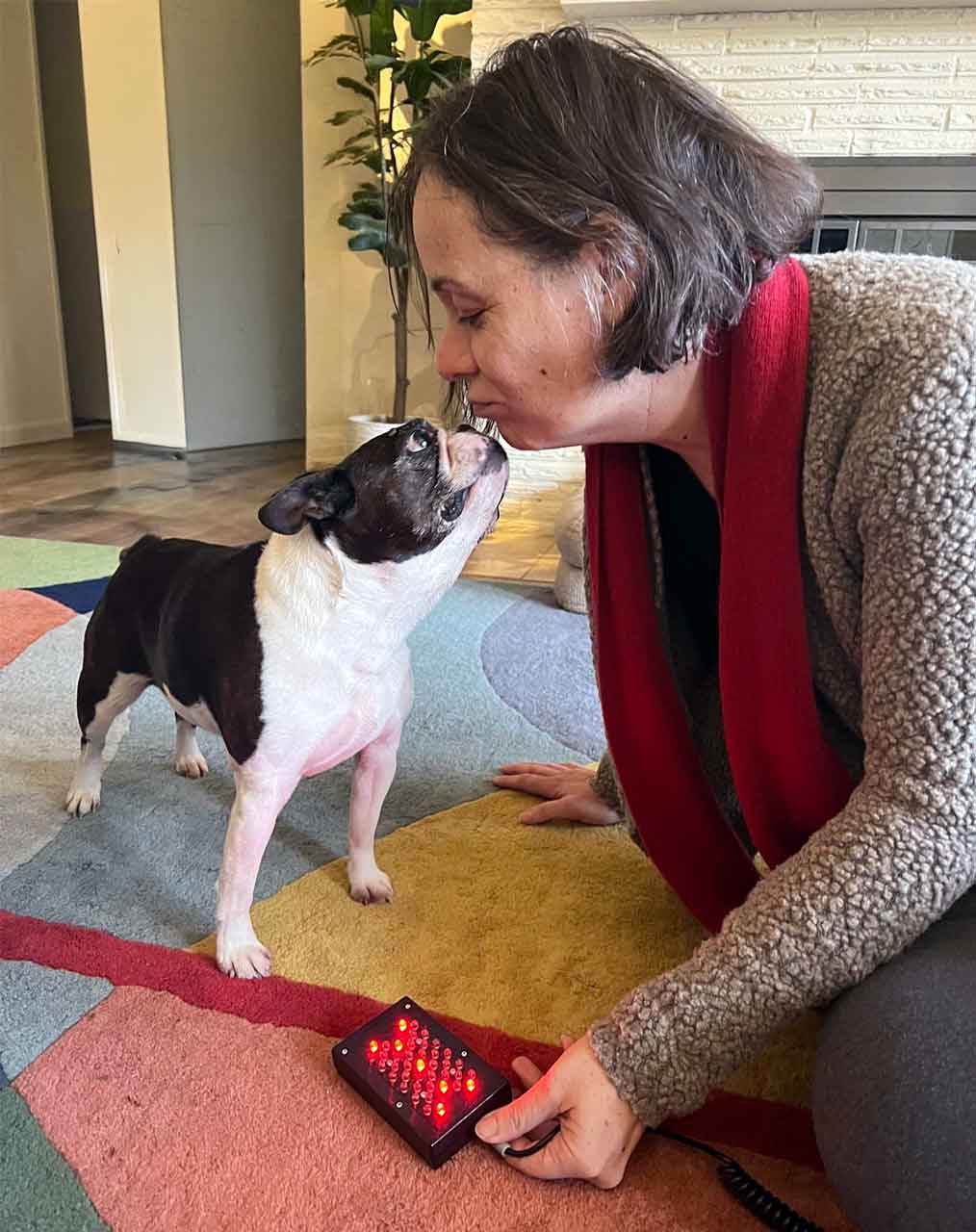
Photo caption: Michelle Nichols’ dog, Bunny, thanking Dr. Marta Nobrega during a home laser treatment. Bunny and Dr. Nobrega sitting on the family room floor and Bunny giving kisses.
What Happens After the Appointment Ends
Once you walk out of the clinic and settle back in at home, most of the care shifts to you. You're the one who notices the small changes. You give the medications, offer the comfort measures, help with stairs and slippery floors, and decide when something feels "off." Alongside all of that, you carry the emotional weight of loving someone whose health is changing.
For many families, this happens quietly and continuously: late at night, early in the morning, and in all the space between scheduled visits.

Photo caption: Pet caregiver laying down on kitchen floor leaning on senior dog. With the right kind of support, it’s easier to relax and spend quality time together.
Picture Linda at 2:14 a.m., sitting on the kitchen floor beside Murphy, her 14-year-old Lab. His breathing sounds different tonight. Or does it? She counts his breaths, loses count, starts again. She scrolls back through her phone for the video she took last week to compare. She doesn't want to be "that client" who calls the emergency line over nothing. She also doesn't want to be the person who waited too long. She sits there, awake and alone, trying to decide which fear is the right one to listen to.
If any part of Linda's night feels familiar, please hear this: that uncertainty doesn't mean you lack trust in your veterinarian. It reflects the reality of caregiving.
💡 Care Tip: Before your next appointment, ask your veterinary team a simple question: "What changes would you want me to call about right away, and what can wait until our next visit?" Write their answer down and keep it somewhere you can find it at 2 a.m. (the fridge door works beautifully). Having that list won't take the worry away, but it gives your worry somewhere to go. If something ever feels urgent, trust that instinct and call.
The Gap in Care No One Likes to Talk About
Your veterinary team provides skilled, compassionate medical care, yet they can't be there for the hours, days, and nights when you're caring for your pet at home. No one could. That space between appointments is often where care feels the hardest.
You're being asked to carry a lot to protect your pet's quality of life: watching their comfort, managing symptoms, making sense of changes, and living with the knowledge that their condition is serious. Most families are doing their very best. Without steady support, though, this gap can become the place where fear, guilt, and uncertainty quietly move in.
Think of James and his 16-year-old cat, Pepper, who has kidney disease. She ate half her breakfast this morning and none of her dinner. Was it the new food? A bad day? The beginning of something? James has already called the clinic twice this month, and he's embarrassed to call again. Instead, he lies awake reviewing every choice he's made, wondering whether a better caregiver would already know the answer.
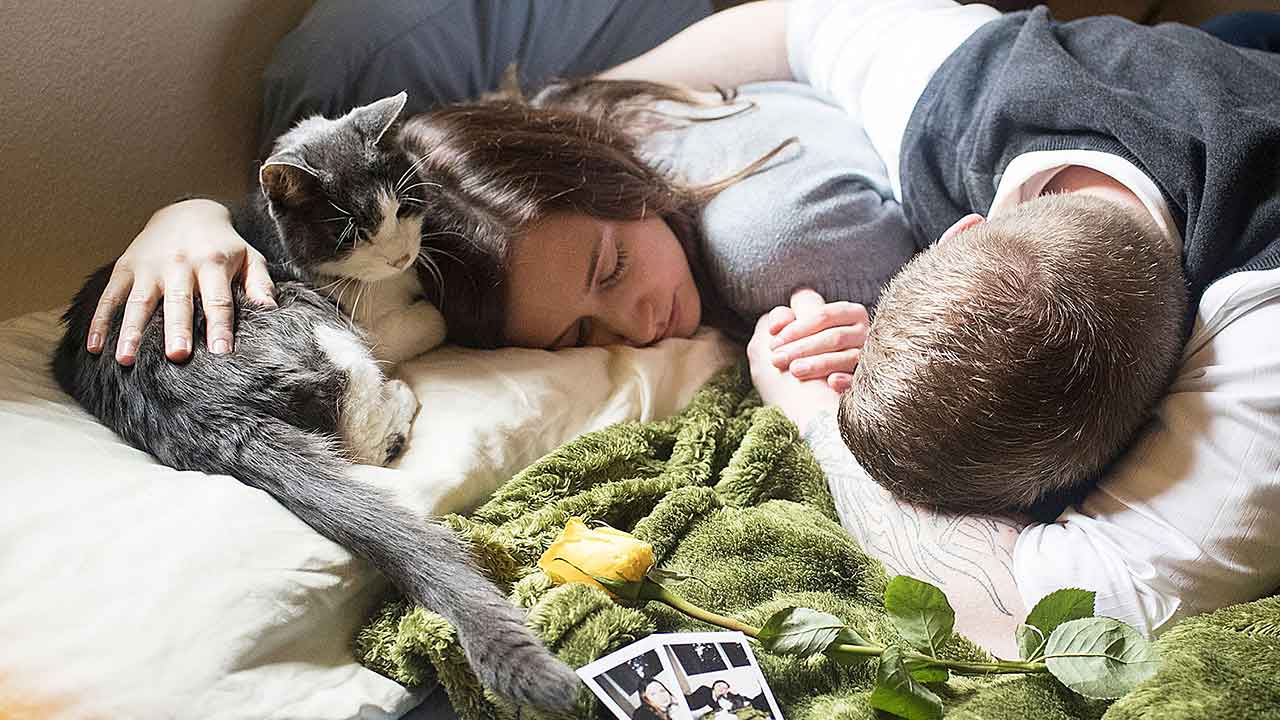
Photo caption: Pet family laying on bed with gray senior cat, photo credit: Julie Austin Photography. Caregiving is not easy and even harder when you don't know what to do next.
James isn't failing Pepper. He's doing exactly what devoted caregivers do: noticing, caring, and worrying. What he's missing isn't love or attentiveness. He's missing someone to think it through with.
When this gap goes unsupported, it can show up as rising anxiety between visits, middle-of-the-night crisis calls, or big decisions made under pressure. When families are supported, they tend to feel more grounded, communicate more clearly with their veterinary team, and continue to provide the steady comfort their pet needs at home.
This isn't a gap in medical expertise.
It's a gap in caregiver support.
💡 Care Tip: Try keeping a simple daily log: one or two lines about appetite, energy, comfort, and one good moment you shared. You don't need a fancy system. Over time, these notes help you see patterns rather than react to single hard moments, and they make it much easier to share clear, useful information with your veterinarian at your next visit. (Just be gentle with yourself: this is meant to support you, not become one more job. If the log starts feeling like a clipboard between you and your pet, it's okay to set it down.)
Why Naming This Gap Matters
Naming this gap isn't about criticizing anyone or asking your veterinary team to do more. Most practices are already stretched to capacity, balancing clinical excellence with a great deal of emotional labor every single day.
The gap exists not because something is missing in the exam room, but because caregiving continues long after the appointment ends.
For you, naming it can be a relief. It means the heaviness you feel isn't a personal shortcoming. Researchers even have a name for the strain that builds when we care for a seriously ill pet: Pet Caregiver Burden. It's real, it's common, and it can look exactly like devotion from the outside.
Supporting you isn't separate from supporting your pet.
It's one of the most meaningful ways to protect their comfort, consistency, and trust over time.
💡 Care Tip: When someone asks, "How's your pet doing?", try adding one more question for yourself: "And how am I doing?" If the honest answer is "running on empty," that isn't selfish or dramatic. It's important information, and it means you deserve support too.
What AHELP Is Doing to Bridge This Gap
For more than fifteen years, I've walked alongside families in this in-between space. I've walked it myself more than once, too. Over and over, I've seen that what families need most between appointments isn't more information. It's a guide: someone who understands both the medical and emotional picture, and who can help them feel steady enough to keep showing up with love.
That's the heart of our Partners to the Bridge, Animal Hospice Coaching. Through Comfort Care Coaching, families are supported by a small interdisciplinary pet hospice team, including a veterinarian, a veterinary nurse, and a caregiver coach, working alongside your own veterinary team, never in place of them. Together, we help you understand what's happening, care for your pet with more confidence at home, and plan ahead for future decisions, so they don't have to be made in a moment of crisis.
You shouldn't have to be alone in this. With Comfort Care Coaching, you won't be.
What I Hope You Take From This
If you're caring for an ill or aging pet right now, here's what I most want you to carry with you:
- Care doesn't stop when the appointment ends. For many families, that's exactly where it feels hardest. If that's true for you, you're not alone, and you're not failing.
- Uncertainty is not the same as doing it wrong. Wondering whether you're doing enough is one of the most common experiences in caregiving. It's a sign of how much you love your pet, not a sign that you're falling short.
- Your veterinary team and your support team can work together. Needing more support between visits doesn't mean your vet has let you down. It simply means caregiving is bigger than any single appointment can hold.
- You deserve support too. Caring for yourself isn't separate from caring for your pet. When you feel steadier, your pet feels it, too.
If this post spoke to you, I'd be grateful if you'd share it with another pet parent who's quietly carrying a lot between vet visits. Sometimes simply knowing the gap has a name is the first step toward feeling less alone in it.
With you on this path,
Michelle
🐾❤️👣🌈
( The family stories in this post are composites drawn from years of walking alongside caregivers. Names and details have been changed. Blog post banner: Michelle Nichols blog post, Between Appointments: Why Caring for Your Ill or Aging Pet Can Feel So Hard, photo of pet caregiver cradling tuxedo black and white cat in their arms while looking at the cat lovingly. It can be difficult when you’re the sole person in charge of your pet’s care. )
|
About the Author: Michelle NicholsAs an Animal Hospice Coach and Educator—a Pet Hospice Partner—I have the privilege of supporting families through one of life’s most sacred and challenging passages: accompanying a beloved dog or cat in their final chapter. My goal is to offer not only practical guidance but also emotional support and a deeper way to relate to this time—not just as an ending, but as a meaningful, even healing experience. With 30 years of combined experience in human and pet-related grief counseling, I continually refine my skills to serve pet parents best and to help prepare the next generation of pet hospice leaders through education and mentorship. My virtual door is always open. Reach me at [email protected]. |
Join Our Newsletter List!
You’ll receive the latest blog posts, useful tools, and plenty of inspiration. As a special gift, you'll receive a FREE Handout Combo download of Animal Quality of Life Indicators to Report to Your Veterinarian AND 40+ Questions to Ask Your Veterinary Team—both a valuable resource!

