
What a Veterinary Nurse Sees: Three ‘Tails’ from the Hospice Journey
By Barb St. Amant, RVT, CHPT® | Veterinary Nurse with AHELP’s Partners to the Bridge Animal Hospice Coaching
A note from Michelle: October is Vet Tech Appreciation Month, when we celebrate veterinary technicians and nurses, the people who so often quietly hold everything together for our pets and for us. I asked Barb St. Amant to share what her everyday work with families actually looks like. Barb leads the Veterinary Nursing session and teaches caregivers how to monitor quality of life in our Comfort Care Coaching program. I think you'll see why I'm so grateful she's on our team!
For 35 years as a licensed veterinary technician, or veterinary nurse, I've had the honor of caring for cats, dogs, and the people who love them. I started in hospitals and then brought pet hospice care into families' homes, often sitting right beside them in their living rooms. Walking alongside families as they begin hospice and palliative care for their senior and ill pets—those in the last chapter of their lives—has been the most rewarding path of my career.
My career has evolved with the needs of pet caregiving families, and I now work with them in their homes through video conferencing, email, and WhatsApp as part of AHELP's Comfort Care Coaching. Many families are surprised by how well this kind of support works online.
In hospice and palliative care, families provide care every day, so my job is to coach, teach, and reassure them. On a video call, a family can carry their phone or laptop through the house and show me the floor their big dog slips on, the bed that has become too high for their cat to jump onto, or the spot where their pet curls up to rest. I get to see their pet's normal habits at home rather than at the veterinary office, which helps us build a care plan that truly fits. I can watch them practice giving a medication or a gentle massage and guide them as they go. Their pet stays relaxed in familiar surroundings instead of riding in the car to a clinic, and families who live far from a hospice provider can still have a veterinary nurse on their team.
Some of these journeys last only a few weeks, and others stretch over years. Whatever the timeline, my goal never changes. I want every family to leave our conversations with something new to try and a little more confidence than they had before.
So let's get into some stories, shall we?
Every pet you'll meet here was under their veterinarian's care. My role was to work beside the vet team to support that care at home, never to replace it.
In my ‘tails’, I'll introduce you to:
- Licorice, a senior Lab whose home had quietly become harder to live in
- Sadie, a cat who came home unable to use her back legs
- Chip, a cat whose family needed help with the hardest question of all: How will we know when it's time?
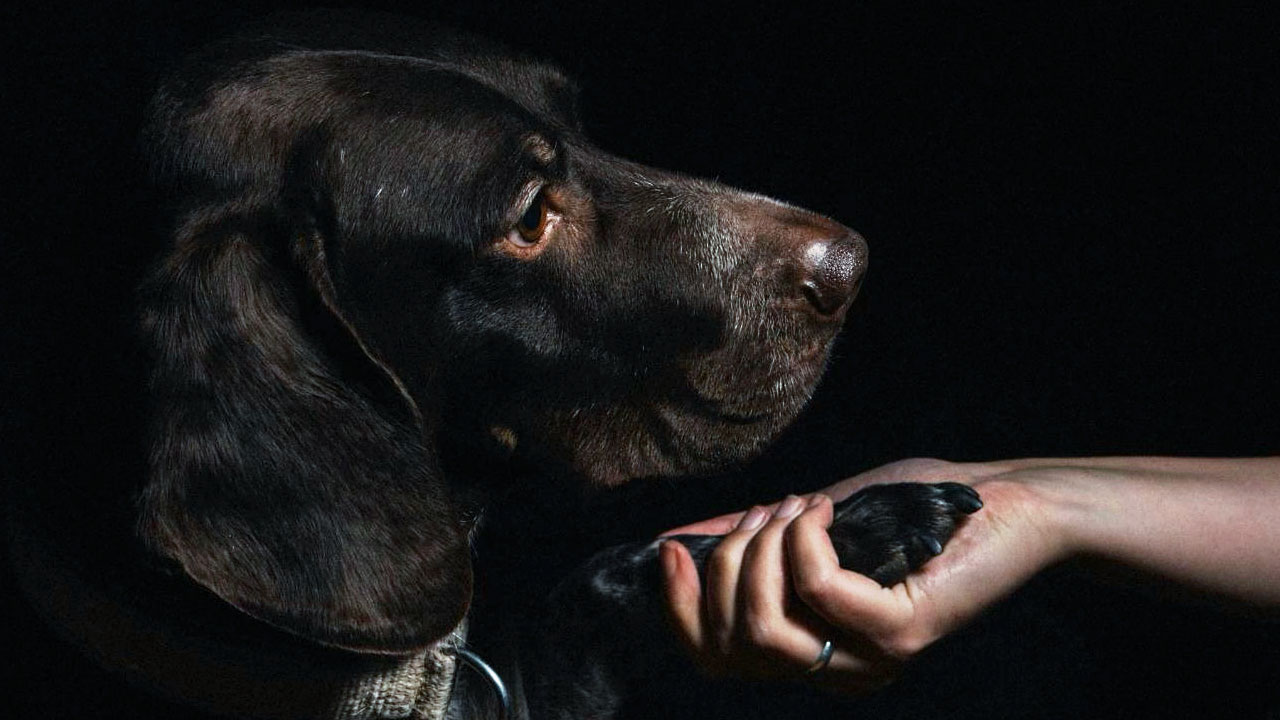
Photo caption: Photo of Licorice, a senior black Labrador Retriever. Her family described her best quality as her unwavering loyalty to them.
When Home Becomes Hard to Navigate: Licorice’s ‘Tail’
Licorice was a 14-year-old Labrador Retriever, and over the past few years, her world had been shrinking. She struggled to keep her footing on the hardwood floors, and more than once she'd gotten stuck halfway through the dog door. Getting up and lying down took her a long time. She no longer met her family at the door, though her deafness probably played a part.
Her family worried most about the changes they couldn't easily explain. Licorice still wanted to be in the middle of things, but after a few minutes she would get up and wander away. She asked to go in and out, over and over, as if she'd forgotten why she wanted to. Sometimes she simply stood still with a blank look on her face, and they noticed this more often in the evenings. When they rated her quality of life, they felt it had slipped below average.
When I sat down with Licorice's family, we focused on two things: making her home safe and easy to move through again, and giving her mind something gentle to do.
We made her a "sniffary." A sniffary is a scent game that lets a senior dog use the sense that often stays sharp the longest. Her family placed a drop of a dog-safe essential oil, such as lavender, chamomile, ginger, or cedarwood, on objects in different rooms and around the backyard, and Licorice could explore and discover them at her own pace. Please apply the scent to objects, never to your pet. And if you share your home with a cat, don't use any essential oils on your cat or in your home without your veterinarian's guidance. Cats are different creatures, and many essential oils are not safe for them.
We gave her paws something to grip. As they age and naturally lose core and leg muscle, especially big dogs often slip on floors. We put non-skid runners, yoga mats, and rugs along the paths she used most. We placed mats lengthwise in front of her food and water bowls, long enough for all four feet, and in front of each of her beds, so she had solid footing right where she needed to push herself up. I also recommended Dr. Buzby's ToeGrips, small rubber grips that slip over a dog's toenails for traction on slick floors. Ask your regular veterinarian if they have them in stock, will order them for you, or if you should purchase them yourself. They can show you how to fit, much like ‘press-on nails’ for your dog's toenails. For many dogs, they're a game changer!
We raised her bowls. Lifting her food and water to just below shoulder height meant she no longer had to stretch down to reach them.
We brought in music made for pets. Calming music designed especially for animals, such as Through a Dog's Ear (there's also Through a Cat's Ear), can help soothe a restless pet, particularly during those harder evening hours.
None of these changes was dramatic on its own. Together, though, they made a real difference. Licorice's family later told me she seemed more comfortable, more alert, and more engaged with them than she had been in a long time.
💡 Something I want you to know: When your pet starts to slow down, it's easy to assume that's simply what aging looks like and that nothing can be done. Often, small changes to your home and routine can restore some of the comfort and connection you thought you'd lost. You don't have to figure out what those changes are on your own.
A Recovery Built at Home: Sadie’s ‘Tail’
Sadie was a cat who had suffered a saddle thrombus, a painful and life-threatening emergency. In a cat with a saddle thrombus, a blood clot breaks loose from the heart, travels down the aorta (the body's main artery), and gets stuck right where it splits to supply the back legs. The blockage cuts off blood and oxygen to the lower body, leaving them partially paralyzed. The vast majority of these cases are caused by underlying heart disease.
Sadie had been through a lot. Her vet team explained to them that these kitties can still gain some function with rehabilitation. By the time she was ready to go home, she was showing real progress. She still couldn't use her back legs, but some feeling had begun to return. But her family was hopeful and wanted to give her every chance, and they also needed to know exactly what to do once they got her home.
Together, we built an individualized home care plan that included:
A clear medication schedule. I showed them how to give the pain medication, buprenorphine, also called Buprenex. Caregivers often don’t realize how much easier it is to apply this formulation on a pet’s gums or under their tongue. I coached Sadie’s person on how to give the other oral medications that had been prescribed.
Gentle exercises they could do themselves. Before each session, they warmed the muscles in her back legs with gentle heat, then massaged them. Next came passive range-of-motion exercises (PROM), where they gently moved her legs through their natural motions. They followed these up with active exercises to encourage movement and rebuild strength. None of this required a professional each time; her family did it all at home. Many families find these quiet sessions also become a way to nurture their pet, not just treat them. If you'd like to see what these exercises look like, this YouTube video is a helpful demonstration: How to Do Passive Range of Motion Exercises with Pets.
A space set up just for her. Sadie could no longer safely get on and off the bed, so her family turned their spare bedroom into her temporary home. Her favorite pillow, the one she had always slept on, went down on the carpet. Nearby, they laid out absorbent pee pads with a little litter scattered on top, along with sturdy food and water dishes that wouldn't tip, all close enough that she didn't have to travel far.
Plenty of love and play. Her people kept her company often and played with her, which mattered for her spirits just as much as her medications mattered for her body.
Remarkably, Sadie made a full recovery. She lived two more good years before her heart disease eventually took her life.
💡 Something I want you to know: Hospice care is a philosophy of care that focuses on comfort and care, and, relatedly, a palliative care plan is the same philosophy extended to long-term care of an illness. Just as can happen with humans, pets can ‘graduate’ from hospice to a palliative care plan. With a focus on comfort and a gentle approach, the best possible outcome can follow. The same comfort-focused care that eases a pet's final days also supports an unexpected recovery. Either way, the goal is the same: to help your dog or cat feel as good as possible for as long as they have.
"How Will We Know When It’s Time?”: Chip’s ‘Tail’
This last story began with an email and continued in a follow-up phone call, and I never needed to be in the same room as Chip to help his family. I'm sharing it because it's a wonderful example of the kinds of conversations I have with families almost every day.
Lindsey's cat, Chip, had been diagnosed with liver cancer at a referral hospital just two days earlier. At home, the family had already started giving him buprenorphine, or Buprenex, for pain, and then they syringe-fed him the steroid prednisolone, or prednisone. For the most part, he was keeping to his usual routines, but he was frailer and more tired than before. He seemed interested in food but ate very little, and Lindsey wasn't sure whether he was drinking. He still wanted to be with his family, though. He wasn't hiding, and he still gave them his affectionate head butts.
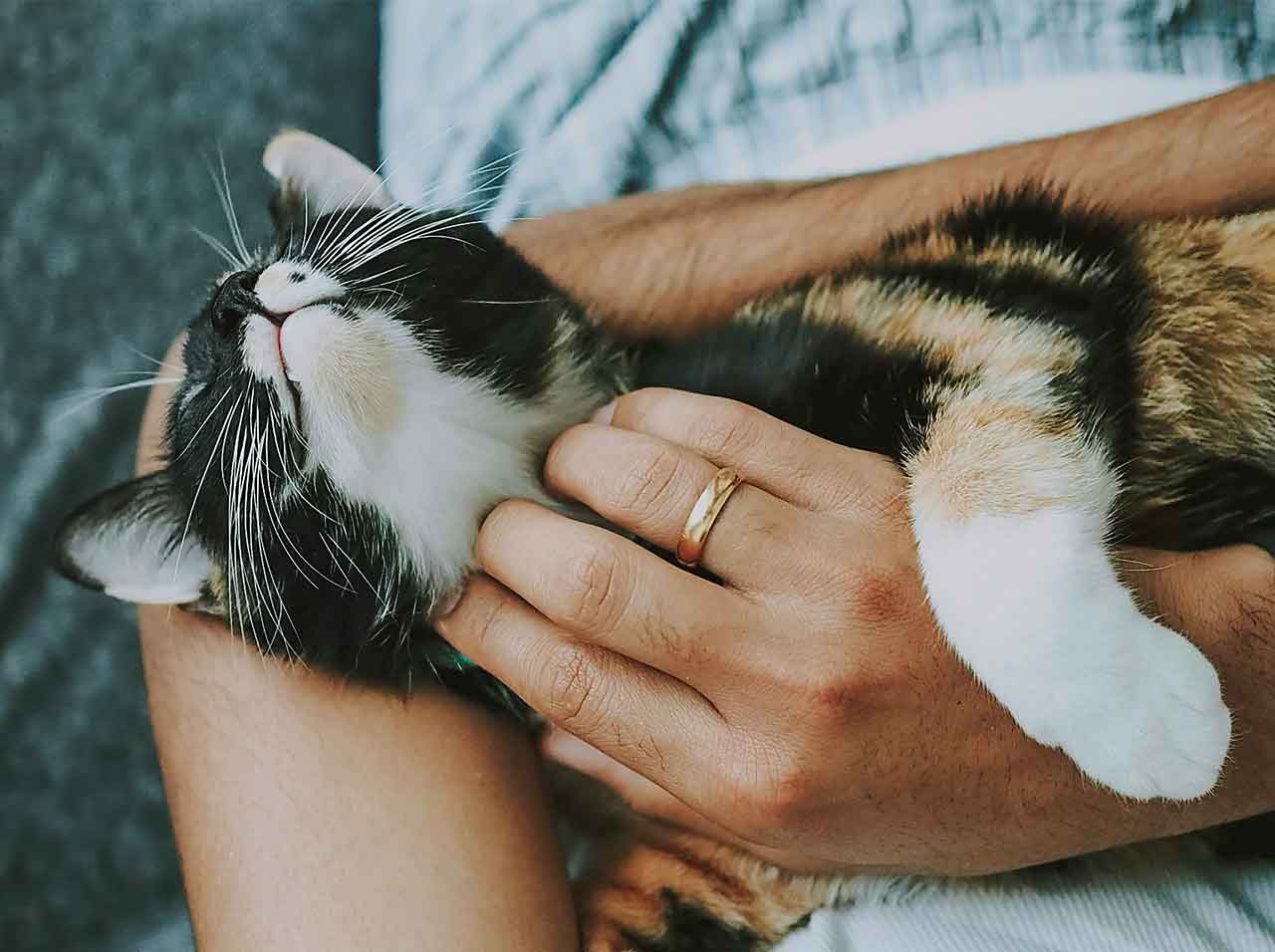
Photo caption: Pet parent cradling young tabby cat in their arms. As a kitten, Chip was as lovable as he was playful.
Lindsey's biggest question was the one so many families carry: How will we know when it’s time? Her family had already decided that as long as Chip seemed comfortable and wanted to be with them, they weren’t ready to say goodbye.
Then she shared a worry that touched my heart, and one I’ve learned is so common among caring pet parents. She wondered whether they were thinking too much about themselves and not enough about him. They asked themselves, “Am I keeping him here for me or because he still wants to be?” I told her it didn't sound at all as though they were being selfish. From everything she described, they had a very good handle on what Chip needed and were listening attentively.
I also told her something I hope reassured her. Without realizing it, she had already identified three of the most important quality-of-life signs to watch for. The first was his willingness to be social, or his pulling away and hiding if that began to change. The second was his overall comfort. The third was the look of engagement in his eyes.
Signs like these can become what we call Decision Landmarks. In the Path of Least Regrets (POLR) coaching framework we apply in AHELP’s Partners to the Bridge Animal Hospice Coaching, Decision Landmarks are markers a family sets in advance, together with their veterinary team, for when they'll pause and reassess what care looks like next. Lindsey's family had already begun naming theirs when they decided what "not ready yet" looked like for Chip. Decision Landmarks are one of the framework's three pillars, along with True North (the values behind a family's choices) and Decisional Readiness (having what they need to act when a landmark is reached).
To help her family keep track, I suggested a simple daily check-in:
Make a short list of his favorite things. Write down the activities and comforts Chip enjoyed as an older cat, then ask each day how many he still enjoys. A quick gut reaction is all it takes.
Mark it on a calendar. Over time, the calendar shows a pattern, so the family can see when his bad days begin to outnumber his good ones instead of trying to remember how last week felt.
During our phone call, Lindsey told me Chip's eating had improved since he started the buprenorphine. (Yay for good pain management!) We agreed she would talk with her veterinarian about adjusting the dose or frequency if his discomfort didn't seem well controlled.
We also discussed syringe feeding. If Chip ever began to resist it, I encouraged her to check in with her veterinarian. Consistent with hospice and palliative care philosophy, we always want to do things for our pets, not to them. As he moved closer to the end of his life, his body would naturally need less and less food and water, and that change is a normal part of the process, not a failure on anyone's part.
💡 Something I want you to know: Worrying that you're being selfish is often a sign of just how deeply you love your pet. You know your companion better than anyone. Trust what you see in their behavior and in their eyes, and lean on your veterinary team to help you understand what it means. Imagine what the perfect farewell looks like, and as soon as you’re ready, explore where their condition is headed and take active steps to prepare for that reality.
What I Hope You Take Away From My "Tails"
Licorice, Sadie, and Chip each faced something very different, but their stories share a common thread. There are countless ways to improve a pet's quality of life, and their family's, for as long as they have. Some are as simple as a rug on a slippery floor, a familiar pillow in a quiet room, or a few minutes with a calendar at the end of the day.
If you're caring for a senior or seriously ill pet right now, please know you don't have to do it all by yourself. A veterinary nurse can help you turn your veterinarian's plan into everyday care that fits your home, your pet, and your family, whether that nurse is sitting beside you or joining you on a video call from miles away.
With gratitude for every pet and person I've had the honor to help, Barb
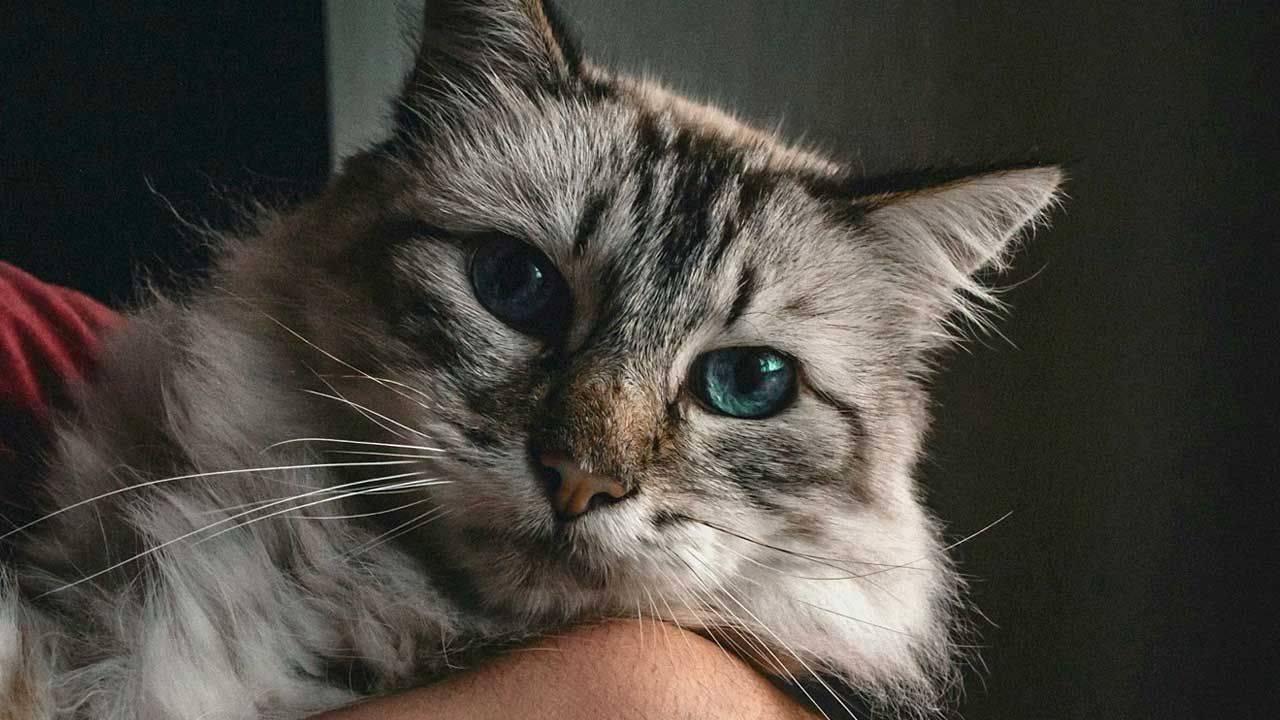
( I have changed names and identifying details in these stories to protect each family's privacy. Blog post banner: Barb St. Amant, Guest blog post, What a Veterinary Nurse Sees: Three ‘Tails’ from the Hospice Journey, photo of Sadie, a long-haired cat looking right at camera. )
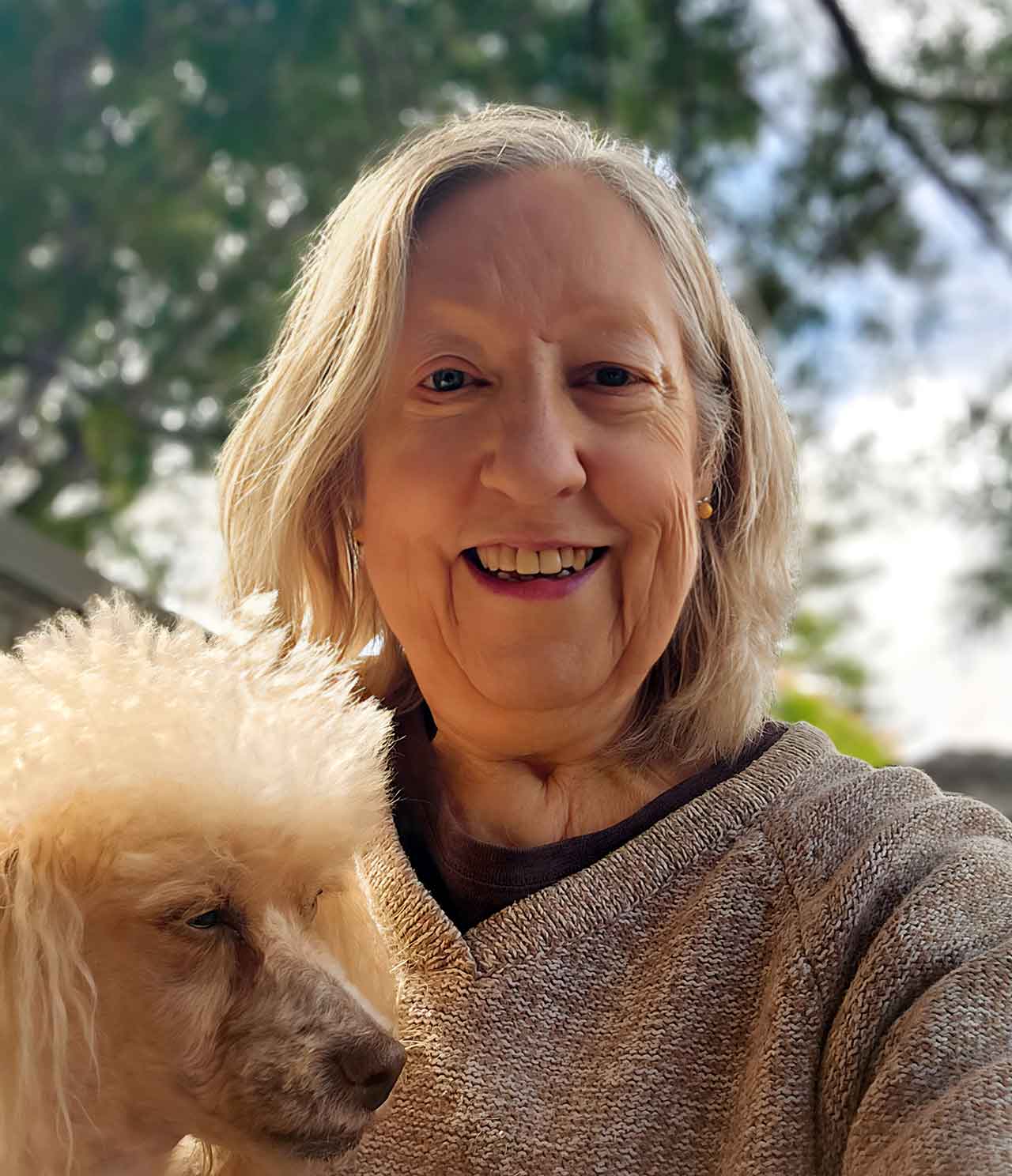
Photo caption: Barb St. Amant with her sweet dog, Sammie, Poodle mix |
About the Author: Barb St. Amant, RVT, CHPT®Guest Blogger Barb St. Amant, has been a licensed veterinary technician for 35 years and founded the veterinary nursing programs at Bridge Veterinary Center in California's Bay Area, which later became the virtualized Blue Pearl Pet Hospice. Today, Barb leads the veterinary nurse session of the AHELP Project's Comfort Care Coaching program. She shares her life with Sammie, a bouncy ten-year-old Poodle mix found in a locked garden; Maddie, a feisty five-year-old domestic shorthair kitty who fostered her way into her heart and never left; and Strawberry, a sweet orange boy who arrived at a year old and has claimed her lap ever since. For more about Barb's experience as a veterinary nurse, please see Barb's bio page on the AHELP Project site. |
Join Our Newsletter List!
You’ll receive the latest blog posts, useful tools, and plenty of inspiration. As a special gift, you'll receive a FREE Handout Combo download of Animal Quality of Life Indicators to Report to Your Veterinarian AND 40+ Questions to Ask Your Veterinary Team—both a valuable resource!

