
Cat Carrier Tips for Senior Cats
Dr. Mansum Yau | Veterinarian, Certified Canine Massage Therapist, Stand-up Comedian, Public Speaker, & Author/Illustrator
Getting a cat into a carrier quickly and injury-free can be tricky even if a cat is geriatric, out of shape, ill, and has not eaten in several days, which is an emergency. So many cats show up late to their vet appointments or, worse, not at all because their caretakers could not get them into the carrier, delaying their treatment and care. Others avoid taking their senior cats to the vet altogether, skipping bi-annual preventative appointments and important quality-of-life discussions because the process of getting them into the carrier and to the clinic is so stressful.
I have seen both caretakers and veterinary staff sustain injuries from getting cats into and/or out of carriers — bites and scratches that could have been prevented. I have also seen cats with preventable carrier-related injuries such as scraped noses and torn toenails and, worse, heard of cats needing toes amputated after getting stuck in carriers.
When cats arrive at the veterinary clinic already stressed in their carrier, they have much less patience for veterinarians and veterinary nurses. If cats are ill, we need to examine them, perform diagnostics such as blood tests and X-rays, and provide treatment such as injections. These procedures cannot be done safely when cats are overly stressed, lunging, swatting, scratching, and/or biting. Sedation then needs to be done, which carries its own risks.
Cats that are calmer in the carrier are often calmer at the veterinary clinic as well. This increases treatment success rates and the likelihood of cats returning to the vet in a timely fashion in the future. Seeing a need for cat carrier training, I wrote and illustrated The Ins and Outs of Cat Carriers: A Veterinarian’s Guide to Cat Carriers, which combines cartoons, humour, and practical tips.
One simple trick to help your cat like their carrier
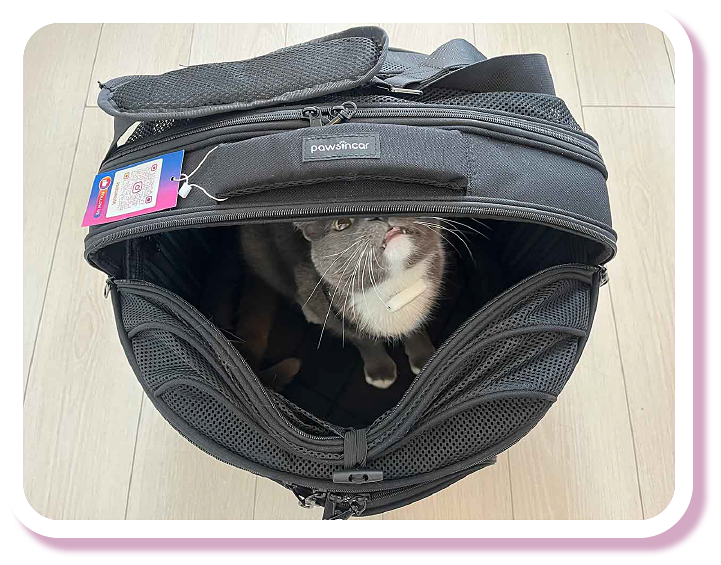
Photo caption: Dr. Mansum Yau's cat, Boo, sitting in the cat carrier that stays out in the room while training Boo to adjust to the carrier. Brand: PawsInCar, Crash-Tested 3-in-1 Portable Small Dog Car Seat, Cat Bed & Pet Carrier – CPS Certified for Crash Protection & Safe Travel.
Leave it out all the time instead of storing it in your closet, attic*, basement*, or garage*. When you put your carrier away, you are essentially hiding it from your cat and preventing them from getting acclimated to it. Many people take the carrier out right before leaving for a vet appointment. The minute their cat sees the carrier, they run and hide.
Leave the carrier out the way people leave boxes out for their cats to sleep in, play in, and even eat in. Let it become part of their everyday world.
🧳 Added bonus: It also makes emergency evacuations much easier.
*Carriers left outside, in the attic, or in the basement often collect dust, cobwebs, and cocoons. Remember, cats are clean animals. Also, keeping the carrier clean and dry prevents rust, making it easier to open and close. This reduces the risk of breakage, injury, or escape.
How to get cats into the carrier more easily
Carriers with more than one door or opening, especially one on top, are easier to get cats into. If your carrier has a single front-facing door and your cat will not go in willingly, I recommend standing the carrier upright with the door facing the ceiling and placing it against a wall. Pick your cat up and place them into the carrier feet first rather than headfirst.
If your cat will not let you pick them up, try using a blanket or towel to wrap them before placing them into the carrier. Calming medications such as gabapentin can be prescribed by your veterinarian to make the process of getting cats into the carrier and transporting them to the vet less stressful.
How to get cats out of the carrier more easily
If cats will not come out on their own, carriers with a top door that allows cats to be lifted out or a lid that can be removed by unclipping it are easier than carriers secured with screws. Better yet, there are carriers that open like a drawer or contain a drawer-like insert instead of one that is velcroed or attached.
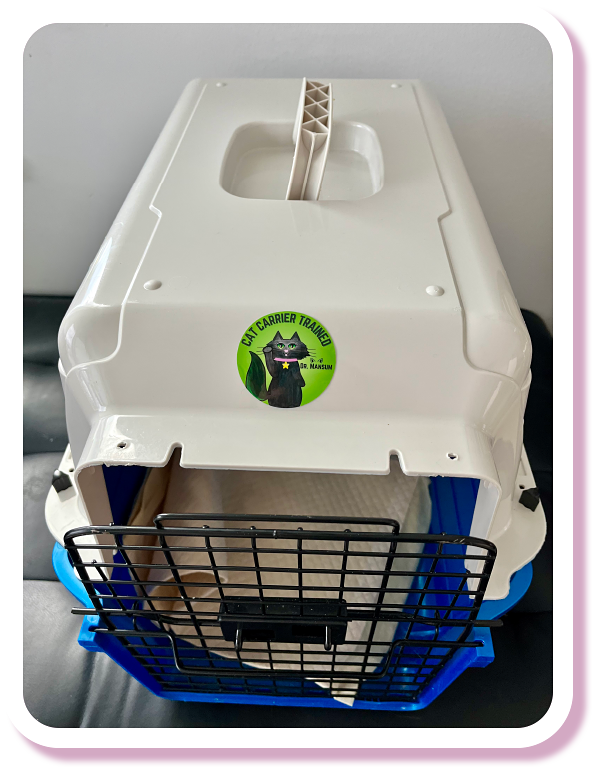
Photo caption: Dr. Mansum’s hard-sided cat carrier with drawer for fast, stress-free loading with a cozy blanket inside for extra comfort. Brand: The Van Ness Calm Carrier with E-Z Load Drawer
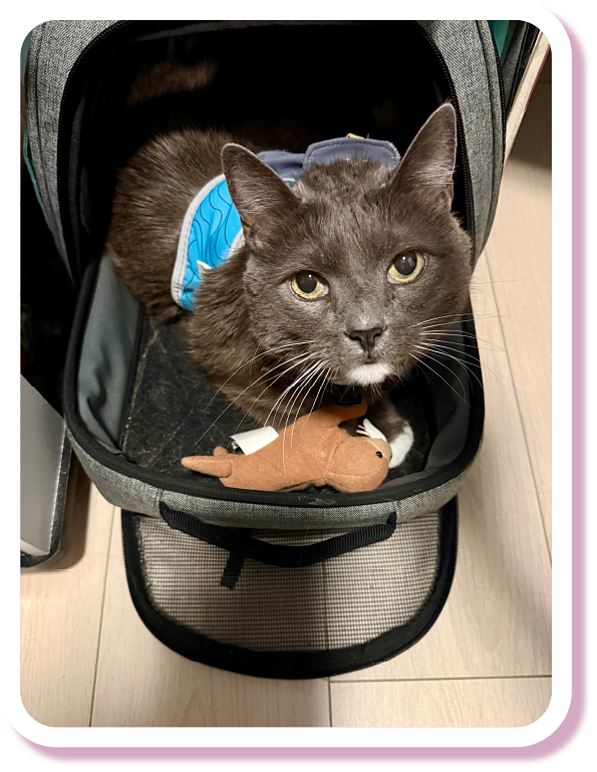
Photo caption: Dr. Mansum’s cat, Boo, sitting in a soft-sided cat carrier with a convenient drawer-like bottom. Brand: Travel Cat, The Transpurrter Ultimate Calming Convertible Cat Carrier
Please avoid taking your cat out by scruffing them because it is uncomfortable and can set them off. The next time someone tries to remove them from the carrier, they may bite defensively.
How to pick a carrier that suits specific purrsonalities and needs
Some cats prefer certain types of carriers over others. There are many types of cat carriers including backpack, soft-sided, collapsible, cardboard, rolling, and hard-sided carriers.
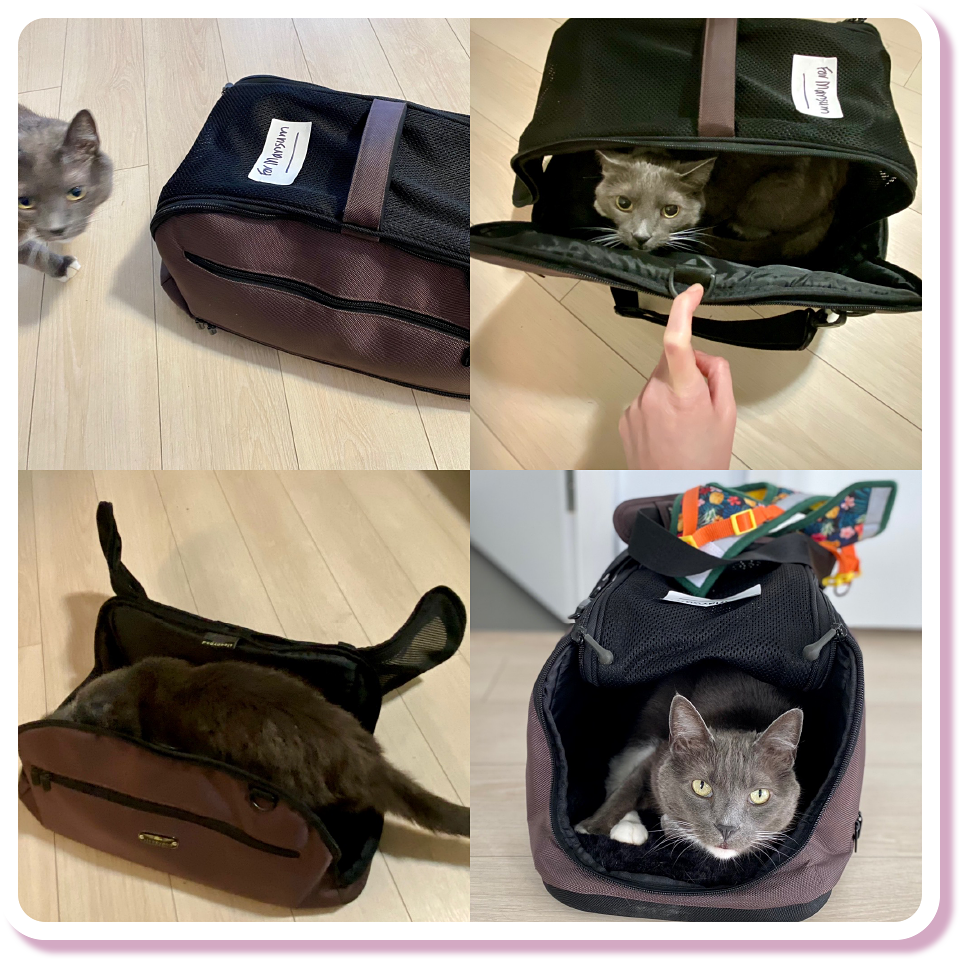
Photo caption: Dr. Mansum’s cat, Boo, exploring the cat carrier. Find the carrier that suits your cat's personality. What would your cat like? Brand: Sleepypod Air, CPS Certified for Crash Protection and Safe Travel
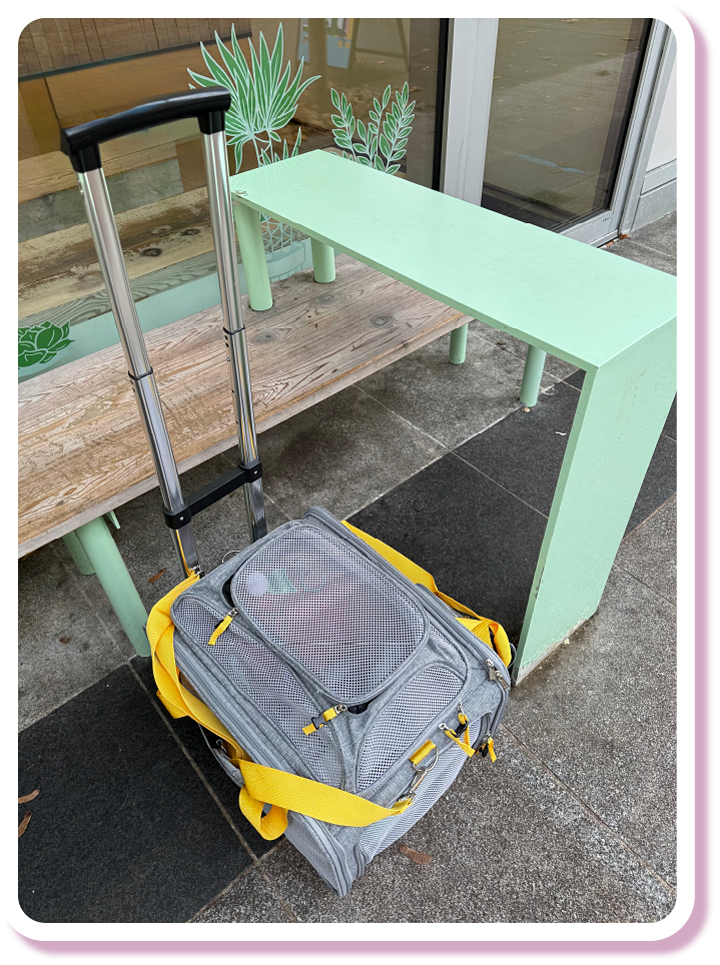
Photo caption: Dr. Mansum's rolling cat carrier with handle for ease of traveling. This particular one has large zipper pockets to also hold supplies for your cat. Brand: pidipiti, Top Expandable Rolling Pet Carrier
Rolling carriers that function like carry-on luggage make transporting heavy or large cats easier, especially for people with back or shoulder pain. Cat backpacks with large clear windows are great for curious, adventurous cats but not ideal for scaredy-cats.
How to know when it is time to replace a carrier
Carriers with broken doors or missing screws or clips are escape hazards and should be replaced. Over the years, I have seen people use everything from wooden chopsticks to bread bag twist ties to zip ties to fasten their cat carriers. Not only can these break, but they also make it harder for the veterinary team to open the lid or door of the carrier safely.
Broken carriers also provide less protection in the event of a collision. Did you know there are crash-tested carriers? A cat carrier is as important as a child car seat, seat belt, and helmet. Don’t treat the carrier as an afterthought. It plays a key role in the safety and health of cats.
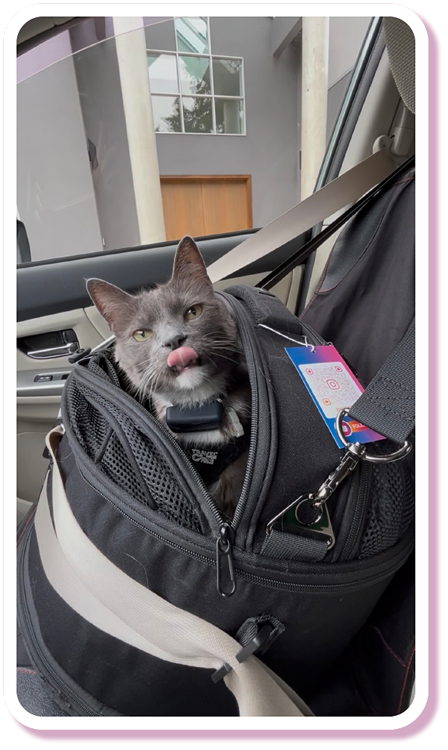
Photo caption: Dr. Mansum Yau's cat, Boo, sitting in the cat carrier while traveling in the car. Buckled in, safe and secure. Brand: PawsInCar, Crash-Tested 3-in-1 Portable Small Dog Car Seat, Cat Bed & Pet Carrier – CPS Certified for Crash Protection & Safe Travel.
For more cat carrier tips, please check out The Ins and Outs of Cat Carriers: A Veterinarian’s Guide to Cat Carriers, available on Amazon, Kindle, Kobo, Etsy, Google Play, and Apple Books.
Note: This is not a sponsored blog post.
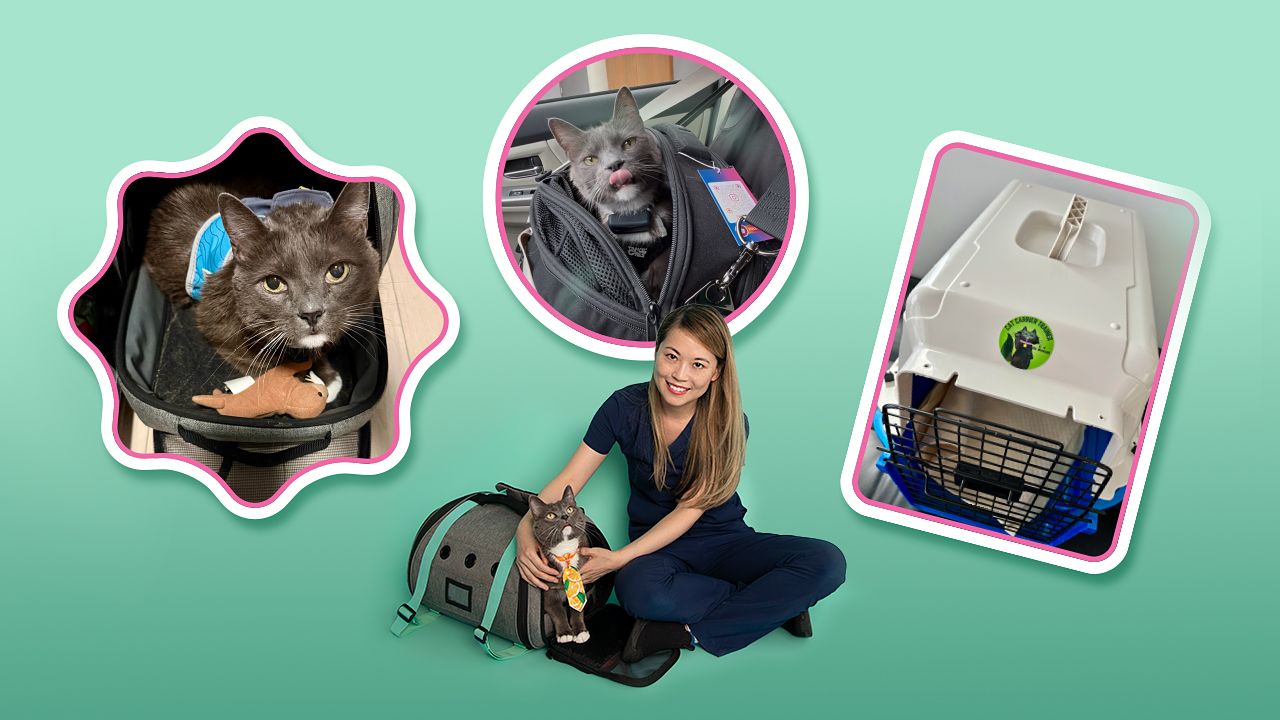
( Blog post banner: Photos courtesy of Dr. Mansum Yau, image of Dr. Mansum sitting on the floor with Boo, the cat, wearing a tie and some photos of cat carriers in the background. )
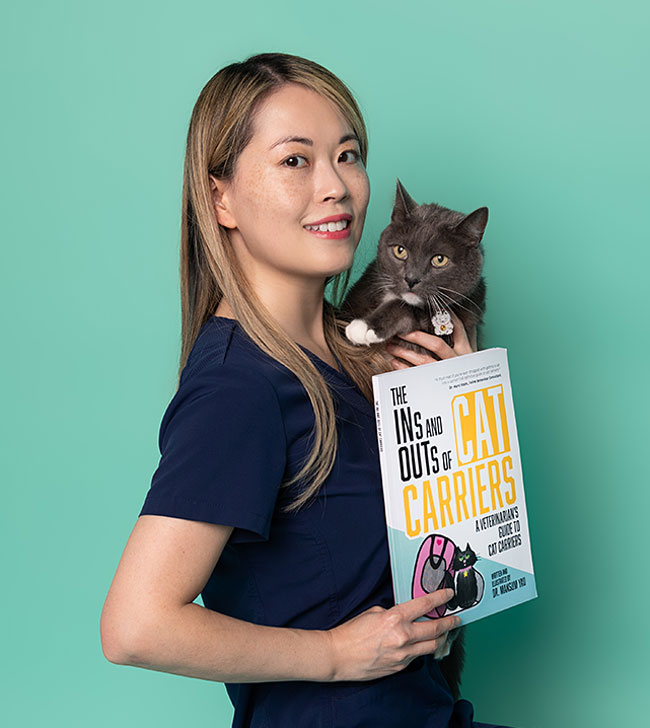 |
About the Author: Dr. Mansum YauGuest Blogger Dr. Mansum Yau is a veterinarian, certified canine massage therapist, stand-up comedian, public speaker, and the author and illustrator of The Ins and Outs of Cat Carriers: A Veterinarian’s Guide to Cat Carriers. She lives in Vancouver, Canada with her one-eyed dog, Penny, and senior adventure cat, Boo. For more cat carrier tips, visit www.youtube.com/drmansum |
Join Our Newsletter List!
You’ll receive the latest blog posts, useful tools, and plenty of inspiration. As a special gift, you'll receive a FREE Handout Combo download of Animal Quality of Life Indicators to Report to Your Veterinarian AND 40+ Questions to Ask Your Veterinary Team—both a valuable resource!

