

The Gift of Listening: What Pet Parents in Grief and Comfort Care Need Most
By Michelle Nichols, MS, HonCAHP, CGRS | Animal Hospice Coach, Educator, Mentor, and Certified Grief Recovery Specialist, AHELP Founder
Listening says:
- I see you.
- I’m not here to fix this.
- You don’t have to make this easier for me.
For pet parents navigating comfort care or end-of-life decisions, listening honors both the love they are giving now and the grief they are already carrying.
Listening well may feel simple—but it’s actually a skill. And during the holidays, it can become a profound act of kindness.
👂 What Active Listening Means When Someone Is Grieving a Pet—or Anticipating a Loss
When people are hurting, our instinct is often to reassure, problem-solve, or look for silver linings—especially during the holidays.
But for pet parents experiencing pet-loss grief, bereavement, or anticipatory grief during hospice or comfort care, what’s often needed most is presence.
Active listening means being fully present with someone without trying to fix, explain, or rush their feelings. It’s listening not just to words, but to what’s underneath them—love, fear, fatigue, and uncertainty.
As a coach, I’ve spent years intentionally honing my skills as a listener—not to have the “right” response, but to create space where people feel safe enough to tell the truth about what they’re carrying.

🐾 10 Active Listening Tips to Support a Grieving or Caregiving Pet Parent
1️⃣ Listen with your whole self.
Set aside distractions and internal commentary. Presence matters more than words.
2️⃣ Pause before responding.
When you feel unsure, pause and ask yourself, “What might I be missing?”
3️⃣ Be a friend, not a hero.
Support doesn’t mean rescuing. Walk beside them—don’t try to carry them.
4️⃣ Offer comfort without judgment.
There is no “right” way to grieve—before or after loss.
5️⃣ Notice what’s happening inside you.
Your calm—or discomfort—will be felt, even if it’s unspoken.
6️⃣ Stay available over time.
Anticipatory grief and pet loss grief don’t follow a holiday schedule.
7️⃣ Allow awkwardness.
“It’s okay to say, I don’t know what to say, but I care.”
8️⃣ Share resources gently, when appropriate.
Support doesn’t mean having all the answers.
9️⃣ Take initiative thoughtfully.
A card, a meal, or a simple check-in can mean more than asking, “What do you need?”
🔟 Lead with compassion.
Even shared experiences don’t make two grief journeys the same.
🧭 A Shareable Tool: Finding the Right Kind of Pet Loss or Anticipatory Grief Support
Everyone grieves differently—especially when grief begins before a goodbye. We created a simple infographic, “Which Kind of Pet Loss Support Feels Right to You?”, to help pet parents and their loved ones explore options such as:
- Talking with a trusted friend
- Working with a pet loss-informed coach
- Seeking support from a licensed mental health therapist
- Finding community or gentle self-guided resources
This can be especially helpful to share with someone supporting a pet parent whose animal companion is in comfort care or nearing the end of life.
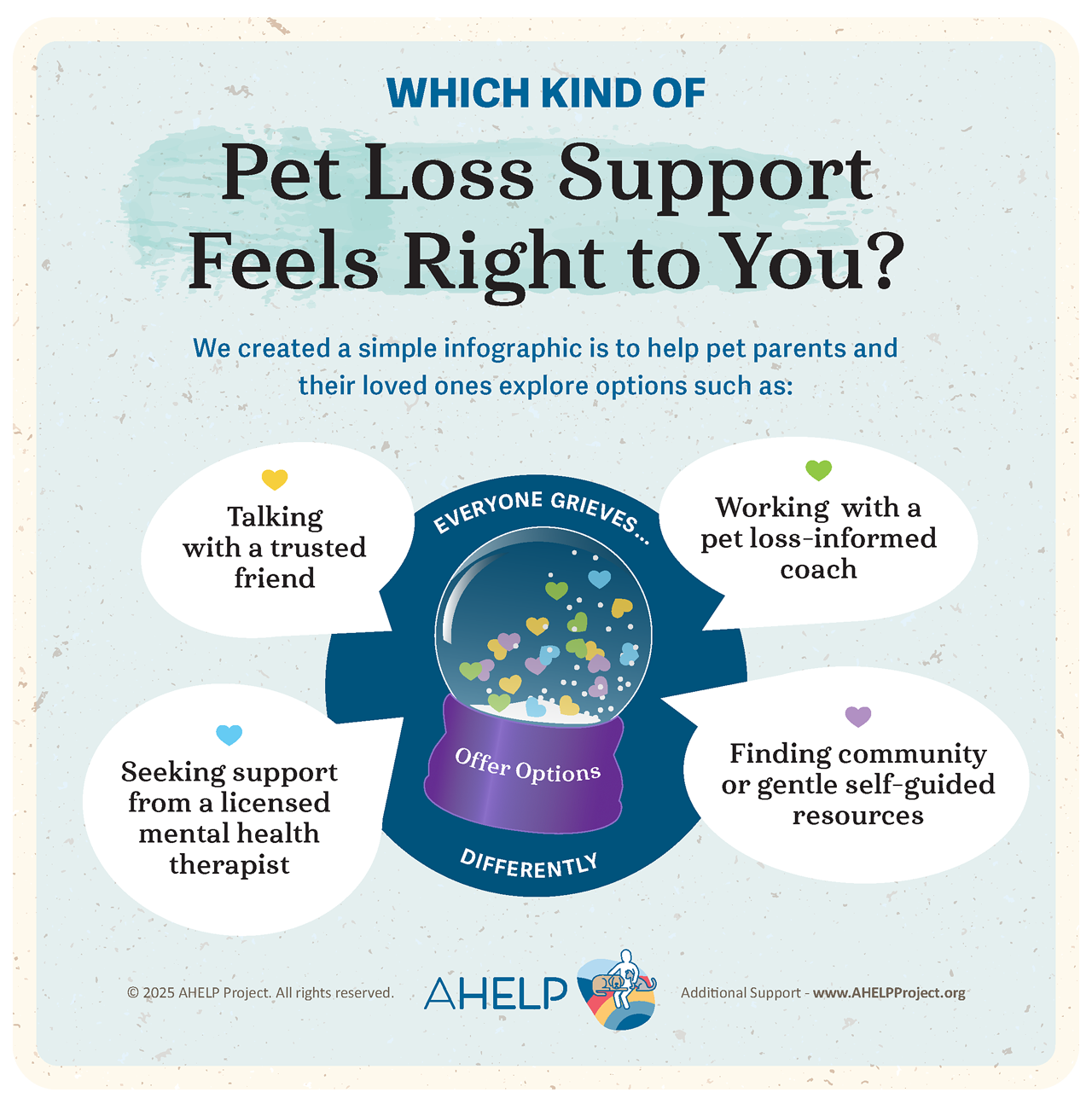
Infographic caption: Everyone grieves differently. This tool can help you explore what kind of support feels right—for you or someone you love.
🕊️ Have Questions About What to Say—or How to Help?
If you’re supporting a grieving or caregiving pet parent and find yourself unsure what to say, what to avoid, or how to offer help without overstepping, you’re not alone.
Below, you’ll find a Frequently Asked Questions section with simple, compassionate guidance—covering what to say (and what not to say), thoughtful holiday support ideas, and how to share resources in ways that honor each person’s unique grief.
Read what feels helpful, and feel free to return to it whenever you need.
❓ FAQs About Supporting Grieving and Caregiving Pet Parents
What do you say to someone grieving a pet?
You don’t need perfect words. What matters most is presence, sincerity, and naming their loss.
Helpful phrases include:
- “I’m so sorry. I know how much you love them.”
- “I’ve been thinking of you and Fluffy/Fido.”
- “I don’t know the right words, but I care about you.”
- “I’m here to listen if you want to talk.”
- “This season must feel especially hard.”
- “Your grief makes sense to me.”
Saying the pet’s name helps a grieving pet parent feel seen. 🐶🐱
* * * * * * * * * * * *
What should you avoid saying to someone who lost a pet?
It can help to show that you understand what they’re going through gently—and to give them permission to protect themselves from comments that unintentionally hurt.
Phrases like these can feel minimizing:
- “At least they lived a long life.”
- “You can always get another pet.”
- “Try to stay positive.”
- “Everything happens for a reason.”
You might say:
“If people say things that don’t land well, it’s okay to take space. You don’t owe anyone your energy right now.”
* * * * * * * * * * * *
How can I support a friend grieving a pet during the holidays?
The holidays can amplify loneliness and reminders of absence.
You might:
- Reach out over text with no pressure to respond–just a heart emoji via text will do.❣️
- Name the season honestly–even if they don’t want to share, if they ask, feel free to offer what you have been doing.
- Share a favorite photo of them and their pet by text or social media.
- Spend quality time on a phone call.
- Invite them out for a short visit over a gingerbread latte or seasonal dessert ☕🍪
* * * * * * * * * * * *
How can I help a pet parent who is caregiving for a sick pet and can’t attend holiday events?
Caregivers are often grieving and exhausted.
Support might look like:
- Offering help that doesn’t require leaving home
- Dropping off a meal or sending groceries
- Sitting with them while they care for their pet
- Offering to stop by and take photos of them and their pet together 📸
For some caregivers, knowing this may be the last holiday season together brings a unique kind of sadness. Acknowledging that tenderness matters.
🌿 AHELP Pet Loss & Anticipatory Grief Support Resources
You Don’t Have to Navigate This Alone
Whether you are:
- grieving the loss of a beloved pet, or
- carrying anticipatory grief while providing comfort care at the end of life,
peer support can make a meaningful difference.
It’s usually not helpful to say, “I have the name of a therapist,” right away.
A gentler approach is to offer options, recognizing that everyone grieves differently. What resonates for one person may not feel right for another.
Share this blog article so they can get the infographic “Which Kind of Pet Loss Support Feels Right to You?”, which allows people to explore possibilities at their own pace, without pressure.
If additional support feels helpful, our Pet Loss Resource Page brings together:
- Pet loss-informed coaches
- Licensed mental health therapists trained in companion-animal loss
- Educational and supportive resources for different stages of grief
This offers choices, not directives.

🕎 🤗A Holiday Invitation to Show Up with Care🧑🎄
This season, consider a different kind of giving.
✨ Reach out to the pet parent who’s missing from gatherings.
💫 Check in on the caregiver walking their pet through the end-of-life journey with love.
🌟 Say their pet’s name.
Grief—both before and after loss—doesn’t need to be fixed to be honored. And sometimes, especially during the holidays, the most generous gift we can give is simply the courage to listen.
If this is you—whether you’re grieving, caregiving, or quietly carrying both—I’m sending love your way.
My virtual door is open for a listening ear and free referrals, whenever you’re ready. You don’t have to be alone. Let us walk with you.
Best wishes into the New Year, Michelle 🐾💞👣🌈
( Blog post banner: Image of a person leaning their head on a friend's shoulder, supporting someone dear to you. )
|
About the Author: Michelle NicholsAs an Animal Hospice Coach and Educator—a Pet Hospice Partner—I have the privilege of supporting families through one of life’s most sacred and challenging passages: accompanying a beloved dog or cat in their final chapter. My goal is to offer not only practical guidance but also emotional support and a deeper way to relate to this time—not just as an ending, but as a meaningful, even healing experience. With 30 years of combined experience in human and pet-related grief counseling, I continually refine my skills to serve pet parents best and to help prepare the next generation of pet hospice leaders through education and mentorship. My virtual door is always open. Reach me at [email protected]. |
Join Our Newsletter List!
You’ll receive the latest blog posts, useful tools, and plenty of inspiration. As a special gift, you'll receive a FREE Handout Combo download of Animal Quality of Life Indicators to Report to Your Veterinarian AND 40+ Questions to Ask Your Veterinary Team—both a valuable resource!

