

How Do I Plan for My Pet’s End of Life? Comfort Care Across the Lifespan
By Michelle Nichols, MS, HonCAHP, CGRS | Animal Hospice Coach, Educator, Mentor, and Certified Grief Recovery Specialist, AHELP Founder
💝 Valentine’s Day is a celebration of love—and for many of us, some of our deepest, most enduring love stories are shared with our animal companions. This love shows up quietly over time: the gray that appears around a muzzle, the senior dog who takes longer to rise, the cat who eats a little less and seeks quieter company.
At AHELP Project, we often say we can be of most help to pet parents while their beloved animal family member is still well. Planning early—before a diagnosis, before fear or urgency takes hold—is one of the most loving things you can do. It allows decisions to be guided by clarity and devotion, not panic.
🌱 Planning While They Are Still Well
Planning does not mean expecting the worst. It means creating a foundation of understanding and support before choices feel heavy.
When planning begins early:
- Learning happens at a calm, manageable pace
- Conversations occur during peaceful moments, not crises
- Decisions feel more aligned with your hopes and boundaries
- Care remains centered on comfort, dignity, and quality of life
Early planning helps you stay fully present with your animal companion today, while feeling steadier about whatever tomorrow may bring.
🗺️ Advanced Planning Tips Across Your Animal Friend’s Lifespan
With the diagnosis of a life-limiting condition—or during a natural decline in health—these steps can help you plan for end-of-life care with more steadiness and fewer regrets. Many families also choose to explore these options while their pet is still well, so they don’t have to make decisions in a crisis. See our May 2025 Pet Hospice Tips and Tails Blog article, Pet Hospice and Palliative Care Budgeting: A Caregiver’s Planning Guide to Managing Costs and Comfort.
Here are a select few tips to keep in mind:
💳 1. Explore Pet Insurance Early
If you don’t already have pet insurance, it’s worth learning how it works before health changes occur. Policies are typically more expensive to start as pets age, but enrolling before pre-existing conditions develop can prevent those conditions from becoming exclusions later.
Many families in the Pacific Northwest are familiar with Trupanion, a Seattle-based provider, though every policy and situation is different. Insurance won’t cover everything—but it can reduce pressure when unexpected decisions arise.
💰 2. Create a Dedicated Veterinary Care Fund
Pet insurance is subject to deductibles, premium increases, and exclusions due to policy terms. If you are skilled at budgeting and prefer a self-directed approach, opening a savings account specifically for veterinary care can bring surprising peace of mind.
Some families choose to:
- Allocate a portion for curative treatments
- Reserve another portion for comfort-focused care if goals shift
When funds are set aside automatically each month, budgets often adapt more easily than expected. It’s also important to know that these accounts may not always cover every expense. Some families supplement care costs with financing options the most common one being CareCredit, though there are other crediting options, see the table below.
TABLE:Crediting Agencies for Veterinary Bill AssistanceFinancing and crowdfunding options can help bridge short-term gaps but may not be appropriate for long-term or comfort-focused care. Families are encouraged to consider repayment obligations alongside quality-of-life goals. 💳 Healthcare & Veterinary Financing Companies(Credit-based; approval required) Scratchpay
Best for: Clients needing immediate coverage with predictable repayment terms CareCredit
Important note: Often helpful, but not ideal for long-term hospice care if balances accumulate LendingUSA
Best for: Families who prefer structured monthly payments over revolving credit Wells Fargo Health Advantage
🏦 General Personal Loan Options(Not veterinary-specific, but sometimes used) LightStream
Upstart
SoFi
🐾 Crowdfunding Platforms(Community-supported; outcomes vary) GoFundMe
Waggle
|
See the 2026 Guide: The 10 Organizations and Charities That Help Pet Parents Pay for Vet Care. Keep in mind that applications can be time-consuming and outcomes uncertain—especially when decisions need to be made quickly. Longer-term care needs may emerge after acute treatment, sometimes in ways that weren’t clear in the moment. Watch for next month’s blog post, where we will go into financial assistance for vet bills in detail, including a handy table of these organizations and tips to help you apply.
🤝 3. Make a Caregiving Agreement
If you were temporarily unable to care for your animal companion, who would step in? Having a caregiving agreement with trusted friends or family helps ensure continuity of care and reduces stress for everyone involved. Many pet parents also include pet care instructions in their own living will, clearly describing preferred services and supports.
Doing this in advance can significantly ease the burden on your executor or loved ones—allowing them to focus on honoring your wishes rather than guessing at them.
🏡 It Takes a Village… and a Team
Animal hospice and palliative care share the same philosophy as human hospice—but without the same built-in systems. There is no automatic team waiting to step in for our pets.
As caregivers, we become the planners, advocates, and coordinators.
This is why earlier support matters so much. When families have guidance before decline accelerates, they are less likely to feel overwhelmed or alone. Earlier referrals to comfort-focused support create steadier ground—for pets and for the people who love them.
❤️ Why Planning Is an Act of Love
Even though we cannot predict exactly how an animal’s journey to the Rainbow Bridge will unfold, some truths are nearly universal:
- We want our animal friends to be comfortable
- We want to preserve their dignity
- We want to balance caregiving with work, family, and daily life
- We want to understand and manage the financial realities of care
These needs are deeply connected. Planning early gives you time to consider trade-offs thoughtfully and intentionally, rather than reacting under pressure.
This is what we call finding your Path of Least Regrets—approaching care and decisions with clarity and support, so you are less likely to carry regret later. When that foundation is in place, healing after loss can unfold more naturally.
📝 What Early Planning Can Include
Planning for comfort across the lifespan may involve:
- Learning about options that support quality of life as pets age
- Thinking ahead about how to balance curative care and comfort care
- Creating a realistic budget that protects both your pet’s needs and your family’s stability
- Identifying trusted people who could help with caregiving if needed
- Keeping medical records organized and accessible
Most importantly, planning creates space for conversation.
📜 Your Pet’s Advance Directive: Putting Love Into Writing
One of the most grounding outcomes of Partners to the Bridge Animal Hospice Coaching is the creation of Your Pet’s Advance Directive.
Much like an advance directive in human healthcare, it helps you:
- Clarify what comfort and quality of life mean for your pet
- Document wishes around care, decline, and decision-making
- Reduce second-guessing when emotions are high
- Ensure everyone involved in care is aligned
Creating Your Pet’s Advance Directive while your animal companion is still relatively well allows decisions later to feel steadier, more intentional, and less burdened by doubt. It’s not about deciding when—it’s about understanding why and how you will care when changes come.
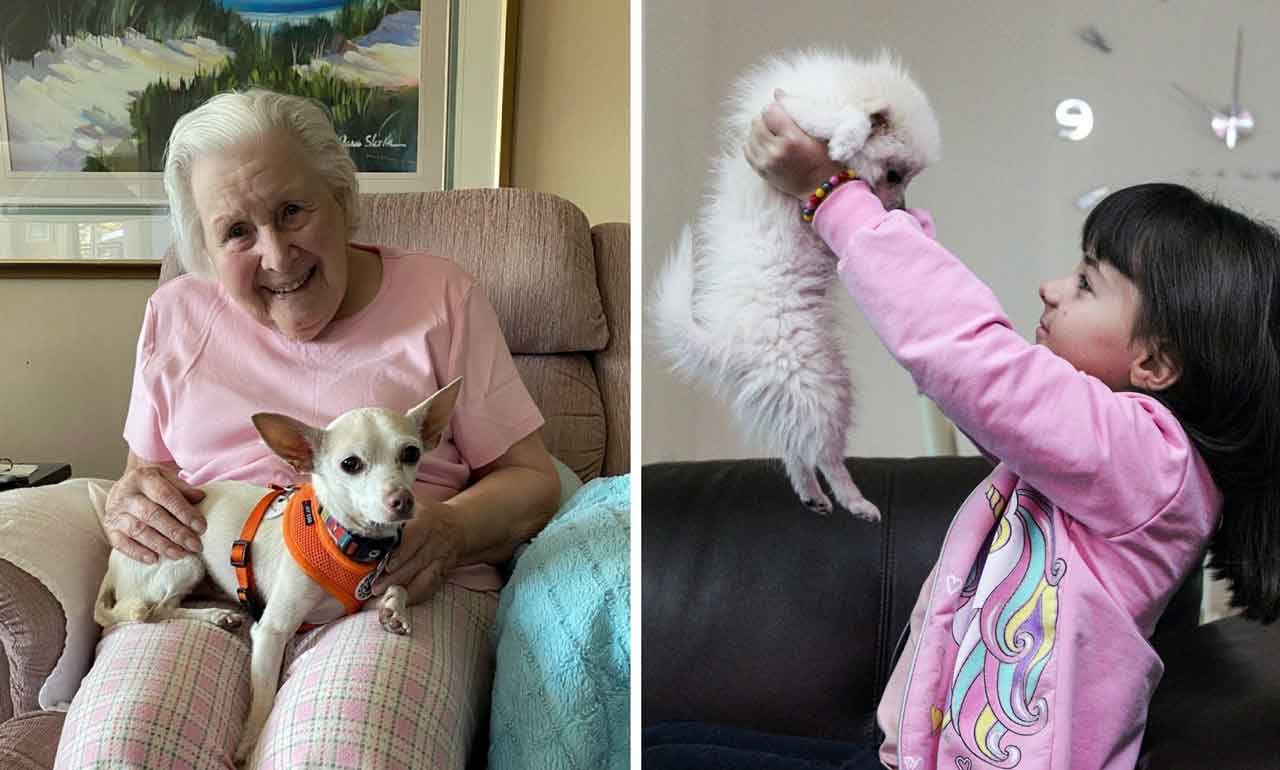
Photo caption: Left photo of mature woman holding a small dog on her lap and right photo of a child lifting up a small senior dog.
🗣️ Talking With Your Family—All of Them
In hospice philosophy, family includes the patient and everyone who loves and supports them. That means your animal companion, your household, and the people walking this journey with you.
These conversations don’t have to be formal. They can be spoken, heart-based, or quietly reflective. Many pet parents find meaning in checking in over time—asking what comfort looks like now, noticing what brings joy, and honoring those cues as they evolve.
Writing your wishes down helps ensure those insights aren’t lost when emotions run high.
❓ “Why Do I Need Animal Hospice Coaching?”

Caption: Your pet’s comfort care and end-of-life journey is more than veterinary care.
Partners to the Bridge Animal Hospice Coaching exists to help families:
- Align quality of life with appropriate timing
- Think through decisions at a manageable pace
- Connect practical planning with emotional readiness
- Document wishes clearly so the entire Comfort Care Team can honor them later
Advanced planning isn’t about controlling outcomes. It’s about creating steadier ground—for your pet, for yourself, and for everyone who loves them.
style="white-space: nowrap; display: inline-block;" color="#fec96f" width="33%" />
💌 A Valentine’s Reflection
This Valentine’s Day, we invite you to see planning not as fear—but as love in action. Planning early protects the bond you share with your animal companion and helps ensure their journey is guided by comfort, dignity, and care.
Comfort. Choices. Empowerment.
That is our Valentine’s wish—for you, and for the animal friends who give us their whole hearts for a lifetime. 🐾💗👣🌈
📅 Schedule a FREE Quick Connect Call to learn more about Partners to the Bridge Animal Hospice Coaching. We are here to walk beside you as your pet’s needs change across their lifespan.
Watch for next month’s blog post, which will go into financial assistance for vet bills in detail, including a handy table of these organizations and tips to help you apply.
( Blog post banner: photo of pet guardian smiling while holding dog, planning across your pet's lifespan. )
|
About the Author: Michelle NicholsAs an Animal Hospice Coach and Educator—a Pet Hospice Partner—I have the privilege of supporting families through one of life’s most sacred and challenging passages: accompanying a beloved dog or cat in their final chapter. My goal is to offer not only practical guidance but also emotional support and a deeper way to relate to this time—not just as an ending, but as a meaningful, even healing experience. With 30 years of combined experience in human and pet-related grief counseling, I continually refine my skills to serve pet parents best and to help prepare the next generation of pet hospice leaders through education and mentorship. My virtual door is always open. Reach me at [email protected]. |
Join Our Newsletter List!
You’ll receive the latest blog posts, useful tools, and plenty of inspiration. As a special gift, you'll receive a FREE Handout Combo download of Animal Quality of Life Indicators to Report to Your Veterinarian AND 40+ Questions to Ask Your Veterinary Team—both a valuable resource!

